
Root Canal Therapy in Lakeland, FL
A severe toothache can make it hard to eat, sleep, work, or focus on anything else. If the pain is coming from deep inside a tooth, you may be dealing with an infected or damaged dental pulp. In that situation, root canal therapy may be the treatment that helps relieve the problem while allowing you to keep your natural tooth.
At Agoka Dental, patients in Lakeland, FL can receive an evaluation for tooth pain, infection, deep decay, cracks, and other problems that may affect the inside of a tooth. Our goal is simple: understand what’s causing your symptoms, explain your options clearly, and provide the treatment your tooth actually needs.
Free Consultation
Have questions? Contact us now for a free consultation and expert guidance for all your dental issues.
If you have persistent tooth pain, sensitivity that lingers after hot or cold drinks, pain when biting, or swelling around a tooth, don’t wait for the problem to disappear on its own. Contact Agoka Dental to schedule a root canal evaluation in Lakeland.
What Is Root Canal Therapy?
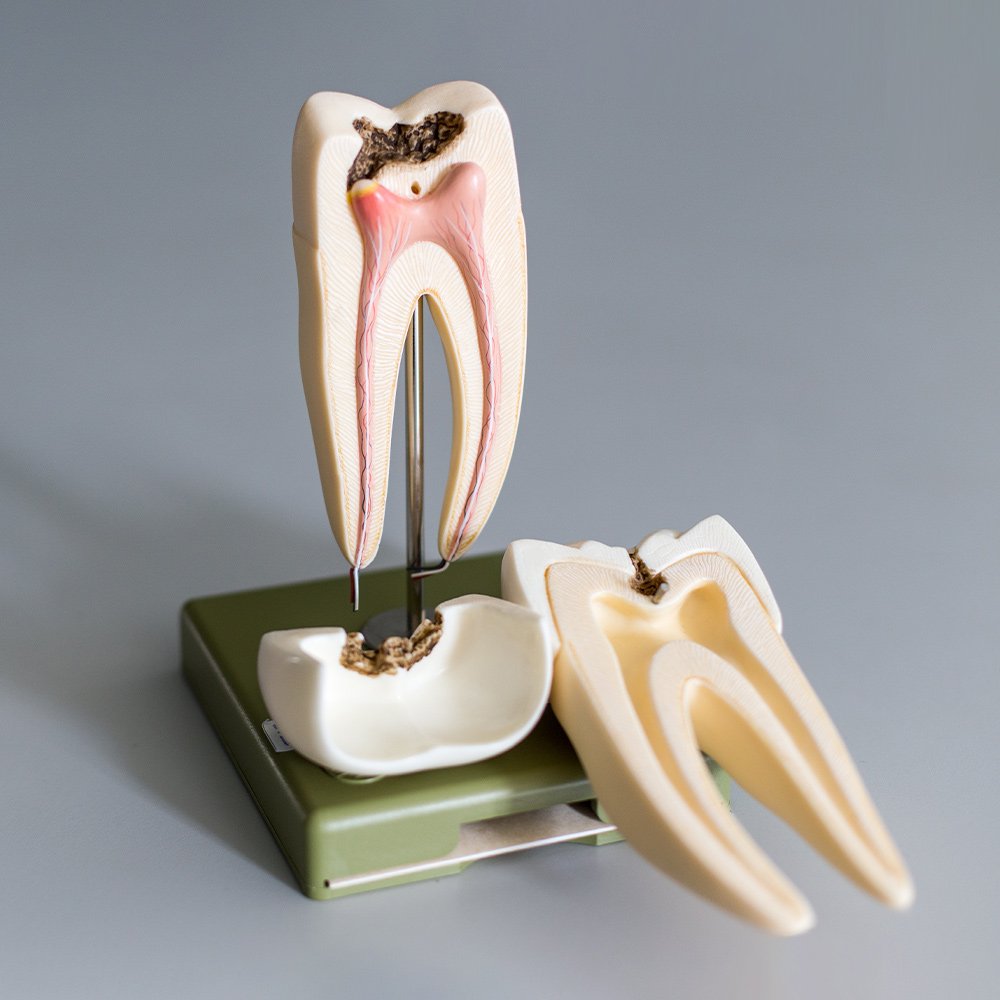
Root canal therapy, also called endodontic treatment, is a procedure used to treat inflammation or infection inside a tooth.
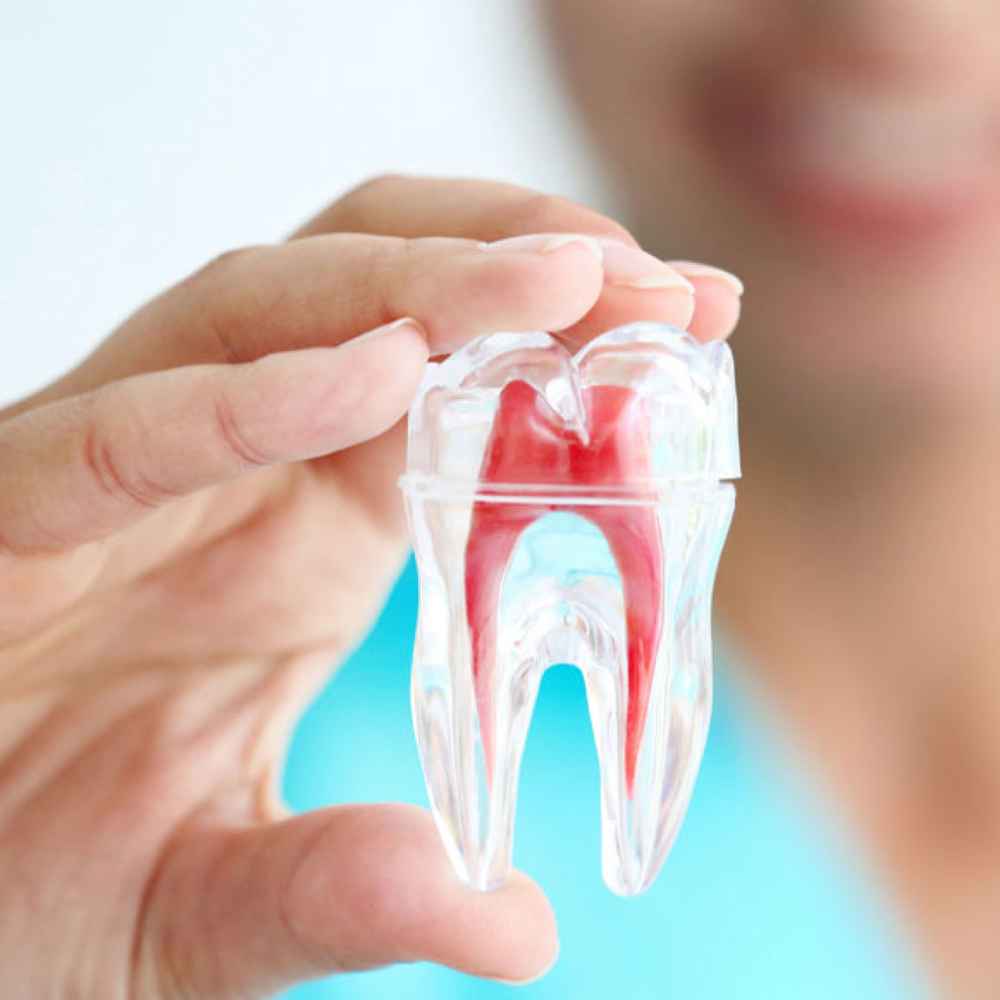
Under the hard outer layers of your tooth is an area called the pulp. It contains nerves, blood vessels, and connective tissue. Deep decay, a crack, trauma, or repeated dental work can damage this tissue. Once bacteria reach the pulp, the tooth may become inflamed or infected.
A root canal removes the damaged or infected pulp. The inside of the tooth is then cleaned, shaped, filled, and sealed. The tooth can later be restored with a filling or dental crown, depending on how much healthy tooth structure remains.
The goal is to save the natural tooth whenever it can be safely restored.
That’s an important distinction. A root canal doesn’t mean you’re losing your tooth. In many cases, it’s the treatment that helps you avoid losing it.
Root Canal Therapy vs. Extraction
If a tooth is infected, some patients immediately assume it needs to be pulled.
Not necessarily.
When a natural tooth can be predictably restored, root canal treatment may allow you to keep it. Removing the infected pulp treats the problem inside the tooth while preserving the tooth itself.
Extraction may be considered when a tooth is too damaged, fractured, weakened, or infected to restore safely.
There are also long-term considerations. After an extraction, the missing tooth may eventually need to be replaced with a dental implant, bridge, or another restoration. Keeping a natural tooth can sometimes avoid that additional treatment.
The right choice depends on the condition of your tooth, the amount of healthy tooth structure remaining, the location of the tooth, and other factors found during your examination.
At Agoka Dental, we can explain whether root canal treatment, a filling, a crown, extraction, or another option makes sense for your situation.
Frequently Asked Questions About Root Canal Therapy in Lakeland, FL
Is a root canal really necessary for a toothache?
Not always. Tooth pain can come from decay, a cracked tooth, gum problems, sensitivity, trauma, or an infected pulp. A dental examination and appropriate imaging can help identify the cause and determine whether root canal treatment is needed.
How long does a root canal take?
Treatment time varies depending on the tooth, the number and shape of its canals, the extent of infection, and other factors. Some straightforward cases can be completed in a single appointment, while more complicated cases may require additional visits.
How long does it take to recover from a root canal?
Many patients experience some tenderness around the treated tooth for a few days. Recovery varies based on the condition of the tooth and surrounding tissues. Follow your dentist’s instructions and contact the office if pain or swelling is severe, persistent, or getting worse.
Will I need a crown after a root canal?
You may. A crown is often recommended when a tooth has lost substantial structure or needs additional protection from chewing forces. Your dentist will assess the tooth and recommend the appropriate final restoration.
Can a root canal save my natural tooth?
In many cases, yes. Root canal treatment is designed to remove infected or damaged pulp while keeping the natural tooth in place. However, a tooth that is severely fractured or cannot be restored may require extraction instead.
Can I wait if my tooth stops hurting?
It’s better not to assume the problem is gone. Pain can decrease when the nerve inside a severely damaged tooth dies, while infection continues around the tooth. If you have had significant tooth pain or other symptoms, schedule an evaluation even if the pain improves.
What should I do if I have severe tooth pain and swelling?
Contact a dentist promptly for an evaluation. Severe swelling, difficulty breathing or swallowing, or rapidly worsening symptoms can be a medical emergency and require immediate medical attention.
Our Process at a Glance
Discovery & Baselines
During your initial visit, we capture 3D cone beam scans, review your medical history, assess bone quality, and create a digital treatment plan showing implant positioning and final restoration design. You’ll leave with a detailed cost breakdown and timeline specific to your case.
Implementation
On surgery day, we place your implant(s) using surgical guides for precise positioning, provide detailed post-operative care instructions, and schedule your follow-up appointments. Most patients return to normal activities within 2 to 3 days with minimal discomfort managed through prescribed medications.
Optimization & Reporting
We monitor healing at 2-week and 8-week intervals, confirming successful osseointegration before taking final impressions for your custom crown or bridge. Once your permanent restoration is placed, we provide a personalized maintenance schedule and remain available for any questions throughout the life of your implant.
Do You Need a Root Canal?
You can’t know for sure based on pain alone. Several dental problems can cause similar symptoms, which is why an examination and appropriate dental imaging are important.
You may need a root canal evaluation if you have:
- A severe or persistent toothache
- Throbbing pain
- Pain when biting or chewing
- Sensitivity to hot or cold that lingers
- Swelling around a tooth
- Tender or swollen gums
- A recurring bump or pimple on the gums
- A cracked or damaged tooth
- Deep tooth decay
- Tooth discoloration
- An abscess or signs of infection
- Pain that wakes you up at night
- A tooth that hurts even when you’re not eating
Sometimes an infected tooth causes very little pain. The nerve inside the tooth can become damaged or die, while the infection continues around the root.
That’s why waiting for the pain to become severe isn’t a good test.
If something about a tooth doesn’t feel right, a dental examination can help determine what’s actually happening.
Common Causes of Root Canal Problems
A tooth can need endodontic treatment for several reasons. Deep decay is one of the most common.
When decay continues through the enamel and dentin and reaches the pulp, bacteria can enter the inner portion of the tooth. The resulting inflammation or infection may eventually require root canal treatment.
Other causes include:
Deep Tooth Decay
A small cavity may be treated with a filling. But if decay reaches the dental pulp, a filling may no longer be enough.
Cracked or Broken Teeth
A crack can create a pathway for bacteria to reach the pulp. Some cracks can be treated, while others may make a tooth impossible to save. An examination is needed to determine the difference.
Dental Trauma
A blow to the mouth can damage the pulp even when the tooth doesn’t look badly broken from the outside.
Repeated Dental Procedures
A tooth that has undergone multiple restorations may become more vulnerable to pulp irritation or damage over time.
Advanced Infection
When bacteria infect the pulp, an abscess can develop around the root. Swelling, drainage, bad taste, or increasing pain can be warning signs.
What Happens During a Root Canal?
Knowing what will happen can make the appointment feel much less intimidating.
1. Examination and Diagnosis
First, your dentist examines the tooth and asks about your symptoms. Dental X-rays or other appropriate imaging may be used to look at the tooth and surrounding structures.
The goal is to identify the source of the pain and determine whether the pulp is inflamed, infected, or damaged.
2. Local Anesthesia
The treatment area is numbed with local anesthesia. You should remain comfortable during the procedure, although you may feel pressure or movement.
If you’re nervous about dental treatment, tell your dental team before the procedure. Knowing that you’re anxious gives the team a chance to discuss ways to make your visit more comfortable.
3. Accessing the Tooth
A small opening is made in the tooth so the dentist can reach the pulp chamber and root canal system.
Dental isolation may be used to help keep the treatment area clean and dry.
4. Removing Damaged or Infected Pulp
The damaged pulp tissue is removed from inside the tooth.
The root canals are carefully cleaned and shaped so they can be properly filled.
5. Cleaning and Sealing
The inside of the tooth is cleaned and disinfected. The canals are then filled and sealed to help prevent bacteria from entering again.
A material called gutta-percha is commonly used to fill the prepared canals.
6. Restoring the Tooth
After root canal treatment, the tooth still needs protection.
Depending on the tooth and the amount of remaining structure, your dentist may recommend a permanent filling or dental crown. Back teeth often need significant protection because they take substantial chewing forces.
The final restoration is an important part of the treatment, not an optional extra.
Does a Root Canal Hurt?
This is probably the question people ask most often.
The purpose of root canal treatment is to treat the source of pain, not create more of it.
Local anesthesia is used to numb the treatment area. You may feel pressure during the procedure, but you should not expect sharp pain from the treatment itself.
Afterward, the tooth may feel tender for a few days. This can happen because the tissues surrounding the tooth may have been irritated by the original infection and the treatment itself.
If your pain is severe, gets worse instead of better, or doesn’t improve as expected, contact your dental office.
And if you’re worried about discomfort, say so. You don’t get extra points for staying quiet in the dental chair.
Root Canal Recovery and Aftercare
Most people can return to normal activities relatively quickly, although the treated tooth may feel different for a short time.
For a smoother recovery:
- Follow your dentist’s aftercare instructions.
- Take medication only as directed.
- Be careful while the area is still numb.
- Avoid chewing hard foods on the treated tooth until your dentist says it’s safe.
- Keep brushing and flossing as usual unless instructed otherwise.
- Attend your follow-up appointment when recommended.
- Complete the permanent restoration if one is needed.
Don’t ignore a temporary filling that becomes loose or falls out. Contact your dental office so the tooth can be protected.
A root canal removes the infected pulp, but the tooth still needs regular dental care afterward. Good brushing, flossing, professional cleanings, and routine dental exams help protect your treated tooth and the rest of your smile.
Why a Dental Crown May Be Needed After a Root Canal
A root canal can save a tooth, but it doesn’t automatically make the tooth as strong as it was before the damage occurred.
If significant tooth structure has been lost through decay, cracks, or previous restorations, a crown may be recommended to protect the tooth from further damage.
The need for a crown depends on factors such as:
- Which tooth was treated
- How much natural tooth remains
- Whether the tooth was cracked
- The amount of chewing force it receives
- The type of restoration already present
- Your dentist’s assessment of the tooth’s strength
A properly planned post-root-canal restoration helps the treated tooth return to normal function and provides additional protection.
Emergency Root Canal Care in Lakeland
Severe dental pain shouldn’t be ignored.
If you’re experiencing a sudden, intense toothache, facial or gum swelling, pain when biting, drainage around a tooth, or other signs of infection, contact a dental office as soon as possible for an evaluation.
A dental infection can become more serious if treatment is delayed.
Facial swelling, difficulty breathing or swallowing, or rapidly increasing swelling can require urgent medical attention. If you have symptoms that affect your ability to breathe or swallow, seek emergency medical care.
For less severe but persistent tooth pain, Agoka Dental can evaluate whether the problem may involve an infected pulp, cracked tooth, deep cavity, abscess, or another dental condition.
Root Canal Treatment for Different Dental Problems
Root canal therapy isn’t limited to one type of tooth problem.
Root Canal for a Severe Toothache
A persistent, throbbing toothache can be a sign of pulp inflammation or infection. An examination helps identify the source before treatment is recommended.
Root Canal for Deep Decay
A cavity that reaches the pulp may cause significant pain or infection. When the tooth remains restorable, root canal treatment may help preserve it.
Root Canal for a Cracked Tooth
Cracked teeth can be complicated. Some can be restored, while certain fractures extend too far to save the tooth. Early evaluation matters.
Root Canal for an Infected Tooth
An infected pulp may cause swelling, pain, drainage, or an abscess. Treatment focuses on removing the source of infection and sealing the inside of the tooth.
Root Canal After Dental Trauma
A tooth can suffer internal damage after an accident or impact. Even if the tooth looks intact, changes in color, sensitivity, or pain deserve an examination.
What If I Don’t Get a Root Canal?
It can be tempting to wait when the pain comes and goes.
Unfortunately, dental infections generally don’t resolve simply because symptoms become quieter.
In some cases, the nerve inside a damaged tooth dies. That can make the pain decrease temporarily, but the infection may remain.
Without appropriate treatment, an infection can affect the tissues around the tooth and may eventually lead to an abscess or loss of the tooth.
That doesn’t mean every toothache requires a root canal. It means you shouldn’t try to diagnose the problem yourself.
A dental examination gives you a clearer answer.
Root Canal Therapy in Lakeland, FL
If you’re searching for a root canal dentist in Lakeland, location matters when you’re dealing with pain.
Agoka Dental serves patients looking for dental care in Lakeland, Florida and the surrounding Polk County area. Whether you’re in South Lakeland, North Lakeland, Lakeland Highlands, Downtown Lakeland, Highland City, Kathleen, Medulla, or another nearby community, getting an evaluation sooner can make it easier to address a dental problem before it becomes more complicated.
You don’t need to wait until a toothache becomes unbearable.
If you have persistent sensitivity, pain while chewing, swelling, a damaged tooth, or signs of infection, contact Agoka Dental to schedule a root canal consultation.
Why Choose Agoka Dental for Root Canal Care?
Choosing a dentist for root canal treatment isn’t just about finding an appointment.
You want someone who will listen to your symptoms, examine the tooth carefully, explain what’s happening, and discuss your treatment options in plain language.
At Agoka Dental, the focus is on patient-centered dental care and clear treatment planning. Your evaluation may include a dental examination and appropriate imaging to determine what is causing your symptoms and whether the tooth can be restored.
You should also feel comfortable asking questions.
How badly is the tooth damaged? Do you actually need a root canal? Will you need a crown afterward? What happens if you wait? Are there other treatment options?
Those are reasonable questions.
A good dental visit should leave you knowing what comes next and why.
Schedule a Root Canal Evaluation in Lakeland
A painful tooth can make your entire day harder. You don’t have to guess what’s causing it.
If you’re dealing with a severe toothache, lingering sensitivity, pain when chewing, a cracked tooth, swelling, or another concerning dental symptom, Agoka Dental can evaluate the problem and explain your treatment options.
Root canal therapy may be able to relieve the source of the problem while helping you keep your natural tooth.
Contact Agoka Dental today to schedule a root canal consultation in Lakeland, FL and take the next step toward getting your tooth examined and treated.
Patient Testimonials
Real Stories from Real Tampa Patients



Make an Appointment
Ready to take the next step toward a healthier, more beautiful smile? Fill out the form below and one of our team members will contact you to confirm your visit. We’re here to make your experience easy and stress-free.
OR CALL US NOW
(813) 879-9000
Prefer to speak with someone directly? We’re happy to help!
Let’s get you scheduled — your smile deserves it.