
Wisdom Teeth Extraction in Brandon, FL
Wisdom tooth pain can start small. Maybe the back of your jaw feels sore when you chew. Maybe your gum is swollen around a tooth you can barely see. Or perhaps you’ve had the same problem several times and are tired of waiting for it to settle down.
If you’re dealing with wisdom tooth pain, you don’t have to guess what’s causing it.
Free Consultation
Have questions? Contact us now for a free consultation and expert guidance for all your dental issues.
Agoka Dental provides wisdom teeth extractions for patients in Brandon, FL and surrounding communities. Our goal is simple: examine the tooth, explain what we’re seeing, discuss your options, and help you decide on the right next step for your oral health.
Wisdom teeth, also called third molars, don’t always need to be removed. Some grow in normally and never cause trouble. Others become impacted, crowded, infected, or difficult to keep clean. A dental examination and appropriate imaging can help determine what’s happening in your mouth.
If your wisdom tooth is hurting, swollen, infected, or causing problems with nearby teeth, schedule a dental consultation with Agoka Dental.

What Are Wisdom Teeth?
Wisdom teeth are the last set of adult molars to develop and appear at the back of your mouth. Most people have up to four, with one in each corner of the mouth.
The problem is that there isn’t always enough room for them to come in properly.
A wisdom tooth may grow straight into the mouth, remain partly covered by gum tissue, or stay trapped beneath the gums or jawbone. When there isn’t enough space, the tooth can become impacted or grow at an unusual angle.
That can make the area difficult to clean and may lead to pain, swelling, infection, tooth decay, or problems with the neighboring molar.
Here’s the thing: having wisdom teeth doesn’t automatically mean you need surgery.
If a wisdom tooth is healthy, fully erupted, properly positioned, easy to clean, and not causing damage, your dentist may recommend monitoring it instead. The right decision depends on your teeth, symptoms, oral health, and dental imaging.
How to Protect the Extraction Site
The first part of healing deserves some extra care.
Follow the specific instructions provided by your dental team. In general, you should avoid actions that could disturb the developing blood clot.
That can include vigorous rinsing, forceful spitting, smoking, or using a straw shortly after extraction.
Keep your mouth clean, but don’t aggressively brush directly over the extraction site.
If your dentist recommends a saltwater rinse, follow the timing and instructions they provide.
The goal is to give the socket time to heal without unnecessary irritation.
Frequently Asked Questions About Wisdom Teeth Extraction
Do all wisdom teeth need to be removed?
No. Some wisdom teeth grow in properly and remain healthy without causing problems. If a wisdom tooth is positioned well, easy to clean, and isn’t damaging surrounding teeth or tissues, your dentist may recommend monitoring it rather than removing it.
Is wisdom tooth extraction painful?
The tooth and surrounding area are numbed with appropriate anesthesia during the extraction. You may feel pressure during the procedure, but you shouldn’t be expected to tolerate significant pain. Some soreness and swelling after the procedure are normal, and your dental team will provide aftercare instructions to help you manage recovery.
How long does wisdom tooth extraction take?
The time varies depending on how many teeth are being removed and whether the teeth are erupted or impacted. A straightforward extraction may be relatively quick, while surgical removal of impacted teeth can take longer. Your dentist can give you a better estimate after examining your teeth and reviewing your dental imaging.
What can I eat after wisdom tooth removal?
Soft foods are usually easier during the early recovery period. Options can include yogurt, applesauce, eggs, mashed potatoes, soft pasta, and other foods that don’t require much chewing. Avoid foods that are hard, crunchy, very hot, or likely to irritate the extraction site until your dental team says they’re appropriate.
How long does wisdom tooth extraction recovery take?
Recovery varies based on the complexity of the extraction and your individual healing process. Many people experience the most soreness and swelling during the first few days, followed by gradual improvement. Impacted or surgical extractions can require a longer recovery than simple extractions.
Can wisdom teeth be removed if they aren't hurting?
Sometimes, yes. Pain isn’t the only reason a wisdom tooth may need removal. An impacted tooth can cause problems without producing obvious symptoms. Your dentist may recommend removal if imaging or examination shows a significant risk to the tooth, surrounding gums, or neighboring teeth. On the other hand, a healthy wisdom tooth that isn’t causing problems may simply be monitored.
When should I see a dentist for wisdom tooth pain?
Make an appointment if your pain persists, keeps returning, or is accompanied by swelling, infection, difficulty opening your mouth, bad taste, drainage, or problems chewing. Severe facial swelling, difficulty swallowing, or difficulty breathing requires urgent medical attention.
Our Process at a Glance
Discovery & Baselines
During your initial visit, we capture 3D cone beam scans, review your medical history, assess bone quality, and create a digital treatment plan showing implant positioning and final restoration design. You’ll leave with a detailed cost breakdown and timeline specific to your case.
Implementation
On surgery day, we place your implant(s) using surgical guides for precise positioning, provide detailed post-operative care instructions, and schedule your follow-up appointments. Most patients return to normal activities within 2 to 3 days with minimal discomfort managed through prescribed medications.
Optimization & Reporting
We monitor healing at 2-week and 8-week intervals, confirming successful osseointegration before taking final impressions for your custom crown or bridge. Once your permanent restoration is placed, we provide a personalized maintenance schedule and remain available for any questions throughout the life of your implant.
When Should Wisdom Teeth Be Removed?
There isn’t one age or situation that applies to everyone.
Wisdom teeth extraction may be recommended when a tooth is causing a current problem or has a strong likelihood of creating an ongoing oral health issue.
Common reasons include:
Impacted Wisdom Teeth
An impacted wisdom tooth can’t fully emerge into the mouth because something is blocking its path.
The tooth may be:
- Fully trapped beneath the gums
- Partially erupted
- Angled toward the neighboring molar
- Growing sideways
- Positioned in a way that makes normal eruption difficult
Impacted teeth can be harder to clean and may create problems around the tooth and surrounding gum tissue.
Wisdom Tooth Pain
Pain at the very back of your mouth can have several causes. A wisdom tooth that’s erupting, impacted, decayed, or surrounded by inflamed gum tissue may be responsible.
Pain that keeps returning shouldn’t simply be ignored.
An examination can help determine whether the discomfort is coming from the wisdom tooth, the neighboring molar, the gums, or another dental problem.
Swollen or Inflamed Gums
You may notice a swollen flap of gum around a partially erupted wisdom tooth.
Food and bacteria can become trapped underneath the tissue. This can contribute to inflammation and a condition called pericoronitis.
Symptoms can include tenderness, swelling, unpleasant taste, bad breath, or difficulty opening your mouth.
Repeated Infection
If the same wisdom tooth repeatedly becomes painful or infected, removing the source may be considered.
Repeated episodes can make eating, brushing, and everyday activities uncomfortable. Waiting until the next flare-up isn’t always the best plan.
Tooth Decay
Wisdom teeth can be difficult to reach with a toothbrush and floss. If a wisdom tooth develops significant decay, your dentist may determine that extraction is more appropriate than trying to restore a tooth that’s difficult to maintain.
Damage to Nearby Teeth
An impacted wisdom tooth can press against the second molar next to it. Depending on its position, this may contribute to decay, gum problems, or damage to the neighboring tooth.
That’s one reason dental imaging matters. Looking only at the visible part of the tooth doesn’t always tell the whole story.
Cysts or Other Abnormal Changes
In some cases, an impacted tooth can be associated with a cyst or other changes around the tooth. Dental imaging can help identify concerns that aren’t visible during a routine visual examination.
What About Dry Socket?
Dry socket is one of the complications patients often worry about after an extraction.
It can happen when the blood clot at the extraction site becomes dislodged or breaks down too early. This can expose the underlying area and cause significant pain.
Following your aftercare instructions can reduce the risk.
If pain becomes severe or gets worse rather than better after initially improving, contact your dental office. Don’t assume you simply have to live with it.
When Should You Call a Dentist About Wisdom Tooth Pain?
Not every sore tooth requires an emergency visit, but some symptoms deserve prompt attention.
Contact a dentist if you have:
- Persistent or severe wisdom tooth pain
- Significant gum swelling
- Facial swelling
- Repeated swelling around a wisdom tooth
- Pus or drainage
- A bad taste that keeps returning
- Difficulty opening your mouth
- Trouble chewing because of pain
- Fever or other signs of infection
- A broken or badly decayed wisdom tooth
If swelling is spreading toward your neck or you are having difficulty breathing or swallowing, seek emergency medical attention.
Don’t wait for a routine dental appointment when swelling or infection is becoming serious.
Wisdom Tooth Extraction for Brandon, FL Families
Agoka Dental serves patients looking for dental care in Brandon and surrounding areas.
Our Brandon-area patients may come from communities such as Bell Shoals, Providence Lakes, Bloomingdale, Heather Lakes, Limona, Brandon Proper, and nearby neighborhoods.
We also serve patients from surrounding communities when appropriate, including areas such as Valrico, Riverview, Seffner, and other parts of the greater Hillsborough County area.
If you’re searching for a wisdom teeth dentist in Brandon, FL, location matters. You want a dental office where you can get your concerns evaluated, understand your treatment options, and receive clear instructions before heading home.
Agoka Dental’s Brandon-focused dental services include preventive, restorative, cosmetic, and extraction care.
What Is Wisdom Tooth Extraction Recovery Like?
Recovery varies from person to person.
A simple extraction may be easier to recover from than removal of a deeply impacted wisdom tooth. Your age, overall health, number of teeth removed, and complexity of the procedure can also affect recovery.
For the first few days, it’s common to have some soreness and swelling.
You may find it easier to eat soft foods such as:
- Yogurt
- Applesauce
- Mashed potatoes
- Eggs
- Soft pasta
- Smooth soups that aren’t too hot
- Other foods that require little chewing
Drink plenty of fluids unless your dental team has told you otherwise.
A cold compress can help with swelling during the early part of recovery. Rest is also helpful, especially on the day of the procedure.
As your mouth heals, you can gradually return to your normal foods and activities according to your dentist’s instructions.
Wisdom Teeth Extraction in Brandon, FL: What to Expect
If you’re nervous about having a wisdom tooth removed, knowing what happens ahead of time can make the appointment feel much easier.
Your care starts with an evaluation.
1. Dental Examination
We’ll ask about your symptoms, medical history, dental history, and any concerns you have about the tooth.
Your dentist will examine your teeth and gums and look for signs of swelling, infection, decay, gum inflammation, or other problems.
2. Dental X-Rays and Imaging
Dental imaging helps show the position of the wisdom tooth and its relationship to nearby structures.
Depending on your situation, your dentist may use digital dental X-rays or other appropriate imaging to evaluate:
- Tooth position
- Root development
- Impaction
- Surrounding bone
- Neighboring teeth
- Potential sources of pain
- Other abnormalities around the tooth
This step helps determine whether extraction is appropriate and what type of extraction may be needed.
3. Discussion of Your Options
You shouldn’t feel pressured into treatment without understanding why it’s being recommended.
We’ll explain what we see and why removal may or may not make sense for your situation.
If the tooth can reasonably be monitored, that’s worth discussing. If removal is the better choice, you’ll have an opportunity to ask questions about the procedure and recovery.
For complex cases, particularly certain deeply impacted teeth, your dentist may recommend treatment with an oral surgeon when specialized surgical care is appropriate.
4. Wisdom Tooth Removal
The type of extraction depends on how the tooth is positioned.
A fully erupted wisdom tooth may sometimes be removed with a straightforward extraction.
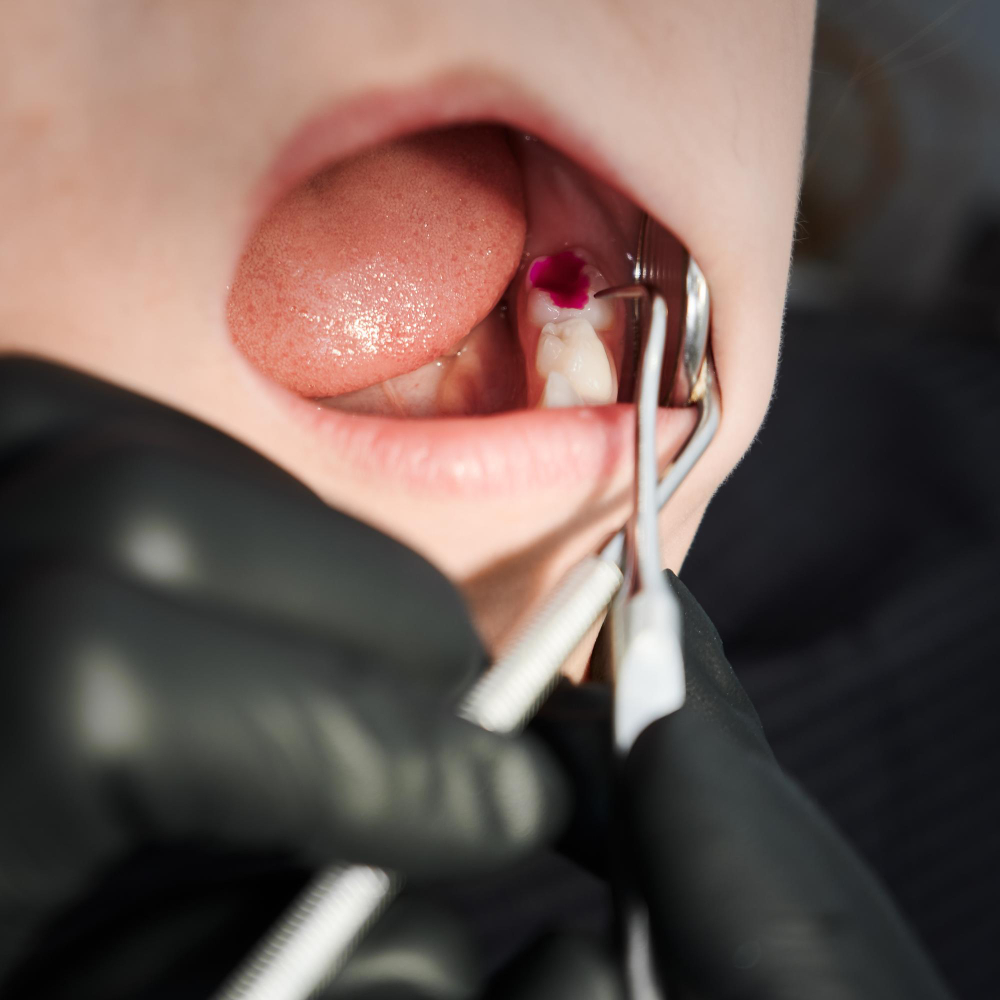
An impacted or partially erupted tooth may require a surgical extraction. This can involve accessing the tooth through the gum tissue and, when necessary, dividing the tooth into sections so it can be removed safely.
Local anesthesia is commonly used to numb the area during extraction.
Your dentist will discuss the appropriate anesthesia and comfort options for your particular treatment.
5. Aftercare Instructions
Before you leave, you’ll receive instructions for caring for the extraction site.
You’ll learn what to do about bleeding, swelling, food, brushing, activity, and medications when prescribed or recommended.
Following these instructions matters. The blood clot that forms in the tooth socket plays an important role in healing.
Why Choose Agoka Dental for Wisdom Teeth Extraction?
Choosing a dentist for wisdom tooth removal isn’t just about finding someone who can remove a tooth.
You want to know why the tooth needs to come out, what the procedure involves, and what recovery will look like.
At Agoka Dental, we focus on clear communication and patient comfort throughout your visit.
A Longstanding Dental Practice
Agoka Dental has served its community for 30 years. The practice provides a range of general dental services, including wisdom teeth extractions.
Clear Treatment Discussions
Wisdom tooth removal isn’t automatically the right answer for every patient.
Your dentist can evaluate the tooth and explain whether extraction, monitoring, or referral for specialized care makes sense based on your individual situation.
Care for More Than One Dental Need
Wisdom tooth problems don’t always happen in isolation.
You may also need help with cavities, gum health, damaged neighboring teeth, routine examinations, or other dental concerns. Having a general dental practice involved can make it easier to look at your overall oral health rather than focusing only on the painful tooth.
Local Dental Care
For patients in Brandon, staying local can make appointments and follow-up care easier.
Agoka Dental’s Brandon service-area content includes communities such as Providence Lakes, Bell Shoals, and Bloomingdale, making the practice familiar with the needs of patients throughout the Brandon area.
Wisdom Teeth Removal Cost in Brandon, FL
The cost of wisdom tooth extraction varies from patient to patient.
There isn’t one price that applies to every wisdom tooth removal.
Your cost may depend on factors such as:
- How many wisdom teeth need to be removed
- Whether the tooth is fully erupted or impacted
- Whether a simple or surgical extraction is required
- The complexity of the tooth’s position
- Dental imaging
- Anesthesia or sedation needs
- Your insurance coverage
- Any additional treatment required
The best way to understand your expected cost is to have the tooth evaluated and receive a treatment estimate based on your specific situation.
If you’re concerned about the cost, ask about your options before treatment begins. A clear discussion about treatment and fees can help you make a decision without surprises.
Don’t Ignore a Wisdom Tooth That Keeps Hurting
Wisdom tooth pain has a way of becoming easy to ignore.
It may disappear for a few days and then come back. You might decide the swelling isn’t that bad. You may simply take something for the pain and move on.
But recurring symptoms deserve attention.
A wisdom tooth that’s difficult to clean, partially trapped beneath the gums, infected, decayed, or pressing against another tooth may continue causing problems.
You don’t have to wait until the pain becomes severe before getting it checked.
If you’re in Brandon, FL and you’re dealing with wisdom tooth pain, swelling, or an impacted tooth, contact Agoka Dental to schedule an evaluation.
Schedule a Wisdom Teeth Consultation in Brandon, FL
You don’t need to spend another week wondering why the back of your mouth hurts.
Whether you’re dealing with an impacted wisdom tooth, recurring swelling, gum irritation, or pain when you chew, an examination can give you answers.
Agoka Dental provides wisdom teeth extraction and general dental care for patients in Brandon, FL and surrounding communities.
Call (813) 879-9000 or request an appointment with Agoka Dental to discuss your wisdom tooth concerns and find out what treatment makes sense for you.
Patient Testimonials
Real Stories from Real Tampa Patients



Make an Appointment
Ready to take the next step toward a healthier, more beautiful smile? Fill out the form below and one of our team members will contact you to confirm your visit. We’re here to make your experience easy and stress-free.
OR CALL US NOW
(813) 879-9000
Prefer to speak with someone directly? We’re happy to help!
Let’s get you scheduled — your smile deserves it.