
Dental Implants in Tampa, FL
Replace Missing Teeth With Strong, Natural-Looking Dental Implants
Missing a tooth can change more than your smile. You may notice that chewing feels different, certain foods become harder to eat, or you feel self-conscious when you talk or laugh. If you have several missing teeth, you may also notice your remaining teeth shifting or your dentures becoming harder to keep in place.
Dental implants offer a stable way to replace missing teeth. Unlike a traditional bridge or denture that sits above the gums, an implant replaces the root of a missing tooth with a small implant post placed in the jawbone. Once the area heals, the implant can support a custom crown, bridge, or full-arch restoration.
Free Consultation
Have questions? Contact us now for a free consultation and expert guidance for all your dental issues.
At Agoka Dental, we provide dental implant treatment in Tampa, FL, for patients who need to replace one tooth, several teeth, or an entire arch. Our goal is simple: help you understand your options, know what to expect, and choose treatment that makes sense for your oral health and daily life.
Our Tampa dental office serves patients from South Tampa, Hyde Park, Bayshore, Palma Ceia, Davis Islands, Harbour Island, Downtown Tampa, West Tampa, Seminole Heights, Ybor City, Carrollwood, Westchase, New Tampa, and surrounding Tampa Bay communities.
If you’re tired of living with a missing tooth or an unstable denture, a dental implant consultation can help you understand what comes next.
What Are Dental Implants?
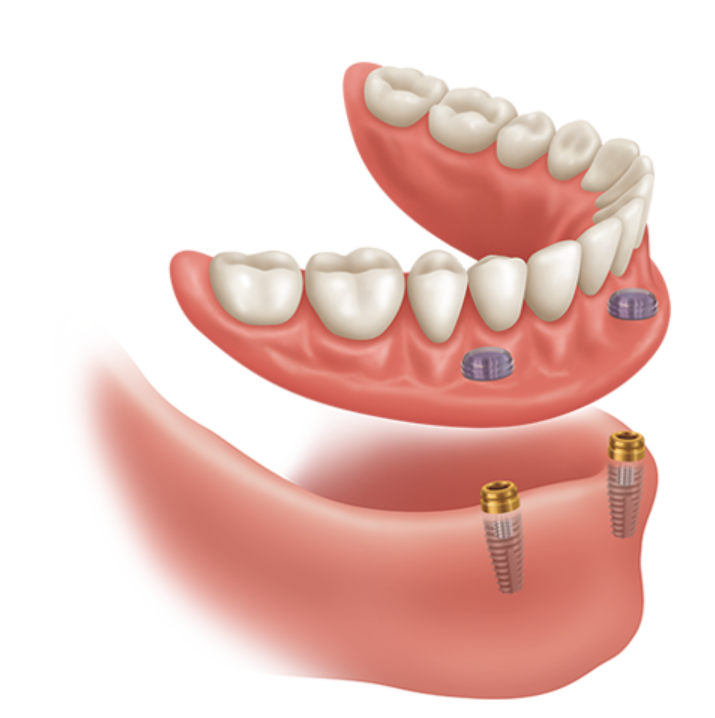
A dental implant is an artificial tooth root that supports a replacement tooth.
Most dental implants have three main parts:
- Implant post: Usually made from biocompatible titanium, this portion is placed into the jawbone.
- Abutment: This connector attaches the implant post to the replacement tooth.
- Dental crown or prosthesis: This is the visible replacement tooth or group of teeth.
After implant placement, the jawbone gradually bonds with the implant through a process called osseointegration. This creates a stable foundation for the final restoration.
For someone missing one tooth, a single implant can support an individual crown. If several teeth are missing, multiple implants may support an implant bridge or other restoration. Patients who have lost most or all of their teeth may be candidates for implant-supported dentures or a full-arch treatment such as All-on-4®.
The right solution depends on your teeth, gums, jawbone, bite, overall oral health, and treatment goals.
Do Dental Implants Look Like Natural Teeth?
They can look very natural when the implant restoration is properly planned and made to fit your smile.
A dental implant itself sits below the gumline. The visible portion is the crown or prosthesis.
For a single front-tooth implant, factors such as tooth color, shape, size, gum contours, and the position of the neighboring teeth all matter.
The goal isn’t simply to fill a gap. Your replacement tooth should fit naturally with the rest of your smile while providing useful chewing function.

Frequently Asked Questions About Dental Implants in Tampa
How long do dental implants take?
The total timeline varies. Some straightforward cases can move relatively quickly, while others require healing after extraction or bone grafting before the implant can be restored. The implant also needs time for osseointegration before the final restoration is attached. Your consultation can provide a more useful timeline based on your specific case.
Are dental implants better than dentures?
Neither option is automatically better for every patient. Dental implants offer a fixed foundation and can provide greater stability than traditional dentures. Dentures may be appropriate for patients who want a removable solution or who aren’t ready for implant treatment. Your oral health, bone support, budget, and personal preferences all matter.
Can I get dental implants if I have bone loss?
Possibly. Bone loss can make implant placement more complicated, but it doesn’t automatically rule out implants. Depending on the amount and location of bone loss, bone grafting or another procedure may be recommended before implant placement. Three-dimensional imaging helps evaluate the available bone.
How many implants do I need?
It depends on how many teeth you’re replacing and what type of restoration you’re receiving. A single missing tooth may require one implant. Several missing teeth may be replaced with an implant-supported bridge using fewer implants than individual tooth replacements. Full-arch treatment may use four, six, or another number of implants based on your anatomy and treatment plan.
Do dental implants require special cleaning?
Implants don’t require the same type of care as natural tooth roots, but they still need regular cleaning. Brush and clean around the restoration every day, and keep your regular dental appointments. Your dental team can show you the best way to clean around your specific implant restoration.
Does dental insurance cover dental implants?
Coverage varies widely. Some dental plans may contribute toward parts of implant treatment, while others may exclude implants or have limitations. Your benefits should be reviewed before treatment so you understand your expected out-of-pocket costs. Financing options may also be available for qualified patients.
What happens if my tooth is still present but can't be saved?
If a tooth is severely damaged or failing, extraction may be necessary before implant placement. In some cases, the implant can be placed after extraction if the bone and surrounding tissues are suitable. In other cases, the area needs time to heal or may require bone grafting first. Your imaging and examination will determine the appropriate sequence.
Our Process at a Glance
Discovery & Baselines
During your initial visit, we capture 3D cone beam scans, review your medical history, assess bone quality, and create a digital treatment plan showing implant positioning and final restoration design. You’ll leave with a detailed cost breakdown and timeline specific to your case.
Implementation
On surgery day, we place your implant(s) using surgical guides for precise positioning, provide detailed post-operative care instructions, and schedule your follow-up appointments. Most patients return to normal activities within 2 to 3 days with minimal discomfort managed through prescribed medications.
Optimization & Reporting
We monitor healing at 2-week and 8-week intervals, confirming successful osseointegration before taking final impressions for your custom crown or bridge. Once your permanent restoration is placed, we provide a personalized maintenance schedule and remain available for any questions throughout the life of your implant.
Who Is a Candidate for Dental Implants?
Dental implants can work for many adults with missing or failing teeth, but not everyone starts at the same point.
During your consultation, we look at the condition of your teeth and gums, the amount and density of available jawbone, your bite, and the location of important structures such as nerves and the sinus.
You may be a candidate if you have:
- One missing tooth
- Several missing teeth
- Teeth that cannot be saved
- Severe tooth decay
- Failing teeth
- Loose or uncomfortable dentures
- Difficulty chewing because of missing teeth
- A desire for a more stable alternative to removable dentures
Healthy gums and adequate bone are helpful for successful implant treatment. If you’ve experienced jawbone loss after tooth loss, that doesn’t automatically mean implants are impossible.
In some cases, bone grafting can add support before implant placement. A sinus lift may also be considered when an implant is needed in the upper back jaw and there isn’t enough available bone beneath the sinus.
This is why an implant consultation matters. You shouldn’t have to guess whether you’re a candidate based on an online checklist.
Dental Implant Options in Tampa
Not every missing tooth needs the same treatment. At Agoka Dental, implant dentistry can address different levels of tooth loss.
Single-Tooth Dental Implants
If you’re missing one tooth, a single dental implant can replace the missing root and support a custom implant crown.
One major advantage is that the implant stands on its own. A traditional bridge generally uses neighboring teeth for support, while a single implant doesn’t require those adjacent teeth to serve as bridge anchors.
Single-tooth implants may be appropriate for a missing front tooth, premolar, molar, or another individual tooth, depending on your oral health and available bone.
Multiple Dental Implants
If several teeth are missing, you may not need one implant for every missing tooth.
Multiple implants can sometimes support an implant bridge or other restoration. The number and position of implants depend on the location of your missing teeth, bone structure, bite, and the type of restoration being planned.
This can provide a stable alternative to replacing every tooth separately.
Implant-Supported Bridges
An implant-supported bridge replaces several missing teeth using dental implants for support.
Unlike a traditional bridge, the implants provide support below the gumline rather than relying entirely on neighboring natural teeth.
This can be useful when several adjacent teeth are missing.
Implant-Supported and Implant-Retained Dentures
Traditional dentures rest directly on the gums and can move during eating or speaking. Implant-supported dentures use dental implants to provide additional stability.
Depending on the design, the restoration may be removable for cleaning while remaining securely attached during normal daily activities.
For people who are frustrated with slipping dentures, poor stability, or denture adhesive, implant-retained treatment may be worth discussing.
All-on-4® and Full-Arch Dental Implants
If most or all of the teeth in an upper or lower arch are missing or failing, full-arch implant treatment may be an option.
The All-on-4® concept uses strategically positioned implants to support a full arch of replacement teeth. Other full-arch plans may use a different number of implants depending on your bone structure and treatment needs.
The important point is that All-on-4® isn’t automatically right for everyone. Your anatomy, bite, gum health, remaining teeth, and restoration goals should guide the treatment plan.
What Is the Dental Implant Process?
Knowing what happens next can make implant treatment feel much less intimidating.
Implant Consultation and Examination
Your treatment starts with a discussion about your missing teeth and what you want to change.
We evaluate your oral health and discuss your medical and dental history. We’ll also talk about alternatives when appropriate.
Sometimes an implant isn’t the best choice. If a natural tooth can be saved with a crown or root canal, preserving that tooth may be worth considering.
Digital Imaging and Treatment Planning
Dental implants require careful planning.
Depending on your case, diagnostic imaging may include digital X-rays and three-dimensional CBCT imaging. A CBCT scan provides a detailed view of the jawbone and helps the dental team evaluate bone volume and important anatomy.
Digital treatment planning and intraoral scanning can also help with the design and positioning of your restoration.
The purpose isn’t to use technology for its own sake. It’s to gather useful information before treatment begins.
Tooth Extraction or Bone Preparation When Needed
If a damaged or failing tooth needs to be removed, extraction may be part of the treatment plan.
Some patients have enough bone for implant placement after extraction. Others may need bone grafting or another preparatory procedure first.
Your treatment plan should explain why additional procedures are recommended and how they relate to the final restoration.
Implant Placement
The dental implant post is placed into the jawbone at the planned location.
Local anesthesia is used during the procedure, and sedation may be discussed when appropriate based on your needs and the type of treatment.
After placement, the implant needs time to heal and integrate with the surrounding bone.
Osseointegration and Healing
This healing period is a key part of implant treatment.
During osseointegration, bone grows around the implant and creates a stable foundation. Healing time varies from patient to patient and depends on factors such as bone quality, implant location, and whether bone grafting was performed.
This is one reason dental implants aren’t always a one-visit treatment.
Abutment and Final Restoration
After the implant has healed sufficiently, the next stage involves connecting the implant to the planned restoration.
For a single tooth, this may involve an abutment and custom dental crown. For several missing teeth, the final restoration may be an implant bridge or implant-supported denture. Full-arch cases require a different type of prosthetic restoration.
The final teeth are designed with appearance, bite, comfort, and function in mind.
Are Dental Implants Painful?
It’s understandable to worry about pain.
During implant placement, local anesthesia helps keep you comfortable. Sedation may also be discussed when appropriate.
After treatment, some soreness, swelling, or tenderness can occur. The experience varies depending on the number of implants and whether additional procedures such as extraction or bone grafting were performed.
Your dental team will provide aftercare instructions for protecting the surgical area during healing.
If you have dental anxiety, tell us before treatment. Knowing what worries you gives the team a chance to address those concerns instead of leaving you to deal with them silently.
How Much Do Dental Implants Cost in Tampa, FL?
There isn’t one price for dental implants because the treatment is different from patient to patient.
The total cost can depend on:
- The number of implants needed
- Whether you need one tooth or several teeth replaced
- The type of restoration
- Implant and abutment components
- The condition of your jawbone
- Bone grafting requirements
- Tooth extraction
- The location of the missing teeth
- The materials used for the final restoration
- The complexity of your bite and treatment plan
A simple single-tooth implant is very different from a full-arch implant restoration.
Agoka Dental’s published Tampa implant information provides estimated ranges for different implant treatments, but your actual cost should be based on your examination and treatment plan rather than a generic online number.
We can also discuss available payment and financing options during the treatment-planning process. If you have dental insurance, we’ll help you understand what your plan may and may not contribute toward implant-related care.
The best question isn’t simply, “How much is an implant?”
Ask what the quoted treatment includes.
That can help you compare treatment plans more fairly and avoid being surprised by separate costs for imaging, extraction, bone grafting, the abutment, crown, or other necessary services.
Dental Implants vs. Dentures vs. Bridges
You have options when replacing missing teeth.
Dental Implants
Implants provide a fixed foundation for replacement teeth and can help maintain the jawbone around the missing tooth.
They may be a good choice if you want a stable, long-term tooth replacement and have suitable oral health and bone support.
Traditional Dentures
Dentures replace missing teeth with a removable appliance. They’re often less invasive than implant treatment and can replace many teeth at once.
However, conventional dentures don’t replace tooth roots and may move during chewing or speaking.
Traditional Bridges
A traditional bridge can replace one or more missing teeth by using neighboring teeth for support.
For some patients, bridges are an appropriate choice. An implant-supported restoration offers another option that doesn’t require the same type of support from adjacent natural teeth.
The best choice depends on your situation. A good consultation should explain the advantages and limitations of each option rather than assuming implants are automatically the answer.
Why Choose Agoka Dental for Dental Implants in Tampa?
Choosing an implant dentist is about more than the procedure itself.
Agoka Dental is a Tampa dental practice providing general, restorative, cosmetic, and implant dentistry. That means your implant treatment can be considered alongside your overall oral health instead of treating the missing tooth as an isolated problem.
Dr. Naresh A. Kalra, Agoka Dental’s Founder, CEO, and Head Doctor, graduated from New York University in 1991 and began private practice in 1994. According to the practice’s published biography, he has treated more than 9,000 patients and has continued his dental education throughout his career.
His listed professional affiliations include the American Academy of Implant Dentistry, Academy of General Dentistry, International Association for Orthodontics, and Tampa Bay Academy of General Dentistry.
Agoka Dental also uses digital dental technology, including three-dimensional imaging and digital treatment-planning tools, as part of its implant care.
Most importantly, we believe you should understand your treatment before you agree to it.
You’ll have the opportunity to ask questions about the procedure, alternatives, expected healing, restoration, and cost.
Dental Implant Maintenance After Treatment
Getting the implant is only part of the process.
Implants still need regular professional care and good home hygiene.
You should continue brushing and cleaning around your implant restoration just as you care for your natural teeth. Depending on your restoration, your dentist or hygienist may recommend specific flossing tools or cleaning techniques.
Regular dental visits allow the team to check:
- The implant and surrounding tissues
- Gum health
- Bite and chewing forces
- The condition of the crown or prosthesis
- Plaque and tartar buildup
- Signs of inflammation or other problems
People sometimes assume an implant can’t develop problems because it isn’t a natural tooth. That’s not true. The tissues around an implant still need care.
Good oral hygiene and regular dental visits are important for protecting your investment.
Local Dental Implant Care for Tampa Patients
Dental implant treatment often involves more than one appointment. That’s why choosing a conveniently located Tampa dental practice can make a real difference.
Agoka Dental serves patients throughout Tampa and nearby communities, including South Tampa, Hyde Park, Bayshore, Palma Ceia, Davis Islands, Harbour Island, Beach Park, Sunset Park, Virginia Park, West Tampa, Downtown Tampa, Water Street, Channelside, Ybor City, Tampa Heights, Seminole Heights, Carrollwood, Westchase, and New Tampa.
Whether you’re heading to an appointment from Bayshore Boulevard, working downtown near the Tampa Riverwalk, or traveling into Tampa from another part of Hillsborough County, local follow-up care can make the implant process easier to manage.
Ready to Find Out If Dental Implants Are Right for You?
You don’t have to decide on implants before your first appointment.
Start with a consultation.
We’ll examine your teeth, gums, bite, and available bone, review appropriate imaging, and talk through your replacement options. If a different treatment makes more sense, we’ll explain that too.
Whether you need a single dental implant, several implants supporting a bridge, implant-retained dentures, or a full-arch solution, the first step is understanding your specific situation.
Schedule a dental implant consultation with Agoka Dental in Tampa, FL, and take the first step toward replacing missing teeth with a stable, functional, natural-looking smile.
Patient Testimonials
Real Stories from Real Tampa Patients



Make an Appointment
Ready to take the next step toward a healthier, more beautiful smile? Fill out the form below and one of our team members will contact you to confirm your visit. We’re here to make your experience easy and stress-free.
OR CALL US NOW
(813) 879-9000
Prefer to speak with someone directly? We’re happy to help!
Let’s get you scheduled — your smile deserves it.