
Dental Implants in St. Petersburg, FL
Missing a tooth can affect much more than your smile. You may notice it when you eat, talk, laugh, or look in the mirror. If you’ve been living with one missing tooth, several missing teeth, or dentures that don’t feel secure, dental implants may give you a more stable way to replace lost teeth.
At Agoka Dental, we provide dental care for patients looking to restore their smile, oral function, and confidence. Dental implants can replace a missing tooth from the root up, giving your replacement tooth a stable foundation in the jaw.
Free Consultation
Have questions? Contact us now for a free consultation and expert guidance for all your dental issues.
If you’re looking for dental implants in St. Petersburg, FL, the first step is a proper evaluation. Not every patient needs the same type of implant treatment. Some people need a single implant and crown. Others may benefit from an implant-supported bridge, implant-retained dentures, or a full-arch solution.
The right plan starts with understanding your teeth, gums, jawbone, overall oral health, and goals.
What Are Dental Implants?
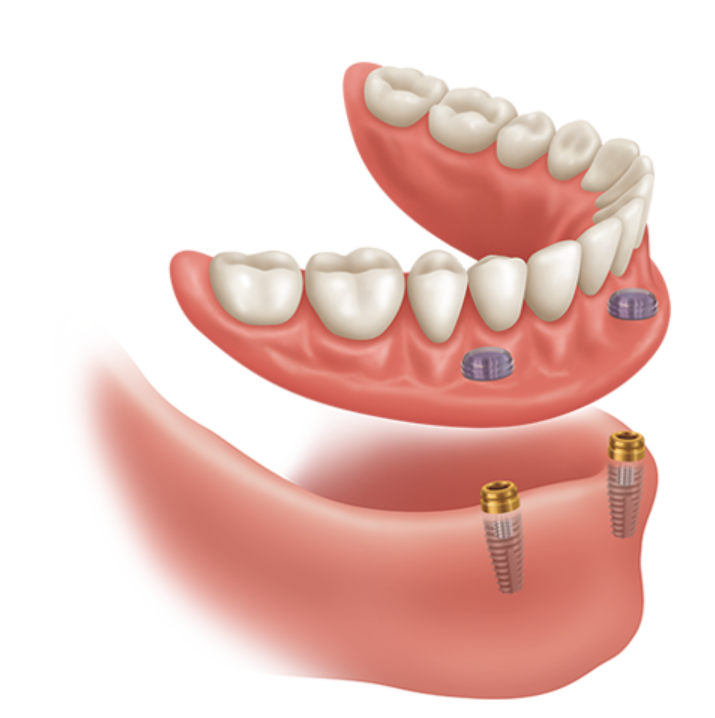
A dental implant is an artificial tooth root that is placed into the jawbone to support a replacement tooth or dental prosthesis.
A traditional removable denture rests on the gums. A dental bridge usually relies on neighboring teeth for support. A dental implant takes a different approach by replacing the root portion of the missing tooth.
A typical implant restoration has three main parts:
- Dental implant post: The portion placed in the jawbone.
- Implant abutment: The connector that attaches the implant to the restoration.
- Dental crown or prosthesis: The visible replacement tooth or teeth.
The implant and surrounding bone can bond through a process called osseointegration. This creates a stable foundation for the final restoration.
For many patients, that stability is one of the biggest advantages of implant tooth replacement.
Who Can Benefit From Dental Implants?
Dental implants may be considered if you’ve lost a tooth because of decay, gum disease, an injury, or another dental problem.
You may be a candidate for:
- A single tooth implant
- Multiple dental implants
- An implant-supported bridge
- Implant-supported dentures
- Implant-retained dentures
- Full-arch dental implants
- All-on-X treatment
- Implant-supported crowns
- More extensive restorative treatment
Your candidacy depends on several factors. Your dentist may evaluate the condition of your gums, remaining teeth, jawbone, bite, and overall oral health before recommending treatment.
If you’ve been told you don’t have enough bone for an implant, don’t assume that means you’re automatically out of options. Some patients may be candidates for procedures such as bone grafting or other preparatory treatment. Those decisions need to be made after an individual examination and appropriate imaging.

Frequently Asked Questions About Dental Implants
How much do dental implants cost in St. Petersburg, FL?
The cost varies from patient to patient. A single implant and crown is different from multiple implants, an implant-supported denture, or full-arch treatment. Additional procedures such as tooth extraction or bone grafting can also affect the total cost.
The best way to understand your expected cost is to have your dental needs evaluated and receive a treatment plan based on the procedures you actually need.
Are dental implants painful?
Implant placement is performed with anesthesia, so you shouldn’t expect to feel the surgical procedure itself. Some soreness, swelling, or tenderness can occur afterward as your mouth heals.
Your dental team can explain what to expect during recovery and how to care for the treatment area.
How long does the dental implant process take?
It depends on your treatment. Some patients need only a straightforward implant and restoration, while others need tooth extraction, bone grafting, healing time, or multiple implants.
The implant also needs time to integrate with the jawbone before the final restoration is placed. Your dentist can provide a more useful timeline after evaluating your mouth.
Can I get dental implants if I have dentures?
Possibly. Patients who are unhappy with loose or unstable dentures may be candidates for implant-retained or implant-supported dentures.
Implants can provide additional support and help reduce denture movement. Your dentist will need to evaluate your bone, gums, bite, and overall oral health before recommending this option.
What if I don't have enough jawbone for an implant?
Bone loss doesn’t necessarily mean implants are impossible. Some patients may benefit from bone grafting or another procedure before implant placement.
However, not everyone needs additional bone treatment. 3D imaging and a clinical examination can help determine the amount and condition of available bone.
How long do dental implants last?
Dental implants are designed as a long-term tooth replacement option, but no dental treatment should be described as guaranteed to last forever.
Their long-term success depends on factors such as oral hygiene, gum health, bite forces, overall health, implant placement, restoration quality, and regular professional care.
Taking care of your implants and maintaining regular dental visits can help protect them over time.
Am I too old for dental implants?
Age alone doesn’t determine whether someone can receive dental implants.
Your overall health, jawbone condition, gum health, medications, oral hygiene, and ability to heal are more relevant factors. Older adults can receive implant treatment when they are medically and dentally appropriate candidates.
Our Process at a Glance
Discovery & Baselines
During your initial visit, we capture 3D cone beam scans, review your medical history, assess bone quality, and create a digital treatment plan showing implant positioning and final restoration design. You’ll leave with a detailed cost breakdown and timeline specific to your case.
Implementation
On surgery day, we place your implant(s) using surgical guides for precise positioning, provide detailed post-operative care instructions, and schedule your follow-up appointments. Most patients return to normal activities within 2 to 3 days with minimal discomfort managed through prescribed medications.
Optimization & Reporting
We monitor healing at 2-week and 8-week intervals, confirming successful osseointegration before taking final impressions for your custom crown or bridge. Once your permanent restoration is placed, we provide a personalized maintenance schedule and remain available for any questions throughout the life of your implant.
Dental Implant Options at Agoka Dental
There isn’t one implant solution that fits everyone. The number of teeth you’re missing and the condition of your mouth help determine which restoration makes sense.
Single Tooth Dental Implants
If you’re missing one tooth, a single dental implant can support an individual crown.
Unlike a conventional bridge, the implant doesn’t require the neighboring teeth to serve as the primary support for the replacement tooth.
This can be a practical option when one tooth is missing and the surrounding teeth are otherwise healthy.
Multiple Dental Implants
If you’re missing several teeth, multiple implants can be used to support individual restorations or a larger dental prosthesis.
The exact number of implants needed depends on the location of the missing teeth, available bone, your bite, and your treatment plan.
Implant-Supported Bridges
An implant-supported bridge can replace several adjacent missing teeth.
Instead of relying entirely on natural teeth for support, implants provide the foundation for the bridge. This can offer greater stability than a removable partial denture for appropriately selected patients.
Implant-Supported and Implant-Retained Dentures
If you wear dentures but struggle with slipping, movement, or difficulty chewing, ask whether implant-supported dentures may be an option.
Implants can help stabilize a denture and reduce unwanted movement. Depending on the design, the restoration may be removable for cleaning or designed to remain fixed in place.
Full-Arch and All-on-X Dental Implants
Patients who have lost most or all of their teeth may need a more extensive solution.
Full-arch dental implants can support a complete row of replacement teeth using strategically positioned implants. All-on-X is a term commonly used for full-arch implant concepts that use a smaller number of implants to support a complete arch.
Full-arch treatment is more involved than replacing one tooth. A careful examination, imaging, treatment planning, and discussion of your restorative options are essential before treatment begins.
What Does the Dental Implant Process Look Like?
People often hear “dental implants” and imagine one appointment. In reality, implant treatment can involve several stages.
Dental Implant Consultation
Your first visit is about finding out what you actually need.
Your dentist can review your dental history, examine your teeth and gums, discuss your concerns, and talk through available replacement options.
This is also the time to ask questions about treatment time, temporary teeth, maintenance, costs, and alternatives.
Digital Imaging and Treatment Planning
Imaging helps your dental team evaluate the area where an implant may be placed.
Depending on your needs, this may include digital X-rays or 3D dental imaging. Three-dimensional imaging can provide a more detailed view of the jawbone and surrounding structures.
Good planning matters because an implant isn’t simply a matter of putting a post where a tooth used to be.
Preparing Your Mouth
Some patients can proceed with implant placement without additional treatment.
Others may need a tooth extraction, gum disease treatment, bone grafting, ridge preservation, or another procedure before implant placement.
The need for these treatments depends on your individual condition.
Implant Placement
The implant post is placed into the jawbone during the surgical phase of treatment.
After placement, your mouth needs time to heal. During this period, the implant can integrate with the surrounding bone through osseointegration.
Abutment and Restoration
Once healing and implant stability are appropriate, the implant can support the final restoration.
Depending on your treatment, that may be an implant-supported crown, bridge, denture, or full-arch prosthesis.
Your dentist will also evaluate the bite and fit of the restoration.
Are Dental Implants Better Than Dentures or Bridges?
That depends on your needs.
Dental implants aren’t automatically the right choice for every patient. Dentures, bridges, and implants each have different advantages.
A removable denture may make sense for someone who wants a non-surgical tooth replacement option. A conventional bridge may be appropriate when neighboring teeth can provide suitable support.
Implants have a major distinction: they replace the tooth root as well as the visible portion of the tooth.
Because an implant is anchored in the jawbone, it can provide stability that removable appliances may not.
The best choice depends on your oral health, bone availability, number of missing teeth, budget, goals, and willingness to go through the implant process.
At Agoka Dental, the goal should be to help you understand those choices so you can make an informed decision.
What If You’ve Been Missing Teeth for Years?
Long-term tooth loss can lead to changes in the jawbone. That’s one reason an implant consultation is worthwhile even if your tooth was lost years ago.
Bone availability is one of the factors your dentist will consider when planning an implant.
If there has been significant bone loss, additional procedures may sometimes be considered. Bone grafting or other preparatory treatment may help create better conditions for implant placement in appropriate cases.
That doesn’t mean every patient needs a bone graft.
Your examination and imaging determine what is actually necessary.
Dental Implants and Gum Health
Healthy gums matter before and after implant treatment.
Active gum disease can affect the tissues supporting your teeth and may create problems for implant treatment. If you have bleeding gums, persistent swelling, gum recession, or a history of periodontal disease, tell your dental team.
Treating underlying oral health problems is often an important part of preparing for long-term tooth replacement.
After your implant restoration is placed, regular dental visits and good home care remain important.
An implant doesn’t get cavities like a natural tooth, but the tissues around an implant still need care.
Caring for Your Dental Implants
Think of an implant restoration as something you need to maintain, not something you can simply forget about after treatment.
Your routine may include:
- Brushing twice a day
- Cleaning between teeth as recommended
- Keeping regular dental appointments
- Following professional cleaning recommendations
- Wearing any recommended nightguard
- Avoiding habits that can damage teeth or restorations
- Reporting unusual pain, movement, swelling, or changes promptly
Your dentist can show you how to clean around your particular implant restoration.
Good maintenance can help protect both your oral health and your investment in tooth replacement.
Why Choose Agoka Dental for Dental Implants?
Choosing an implant provider isn’t just about finding someone who offers implants.
You want a dental practice where you can ask questions, understand your options, and receive care that considers your overall oral health.
Agoka Dental has served its community for 30 years and welcomes new patients. The practice provides general, cosmetic, and restorative dental services, allowing patients to address related dental needs as part of their broader oral care.
That matters because implant patients often need more than the implant itself. You may need an examination, tooth extraction, gum treatment, a crown, bridge, denture, or other restorative care before or after implant treatment.
A dental practice that understands the bigger picture can help you plan treatment around your actual needs.
Dental Implants in St. Petersburg, FL and Nearby Communities
Agoka Dental serves patients seeking dental care in the St. Petersburg and Tampa Bay area.
If you’re located near Downtown St. Petersburg, Historic Old Northeast, Snell Isle, Shore Acres, Historic Kenwood, Grand Central, Crescent Lake, Old Southeast, Coquina Key, Pasadena, Greater Pinellas Point, or other nearby communities, you may be looking for a convenient local dentist for tooth replacement.
Patients throughout Pinellas County may also consider Agoka Dental when researching dental implants and restorative dentistry.
You don’t have to live with a missing tooth simply because you’ve gotten used to it.
If you’re unsure whether implants, a bridge, dentures, or another restoration is right for you, a consultation can help clarify your options.
Take the First Step Toward Replacing Missing Teeth
Living with missing teeth can affect how you eat, speak, smile, and feel about your appearance. You don’t have to decide on a treatment before you understand your choices.
A dental implant consultation gives you the opportunity to discuss your concerns, examine your oral health, review available options, and learn whether implant treatment makes sense for you.
Whether you’re considering a single tooth implant, implant-supported bridge, implant-retained denture, or full-arch dental implants, Agoka Dental can help you understand the next step.
Looking for dental implants in St. Petersburg, FL? Contact Agoka Dental to schedule a consultation and discuss your tooth replacement options.
Patient Testimonials
Real Stories from Real Tampa Patients



Make an Appointment
Ready to take the next step toward a healthier, more beautiful smile? Fill out the form below and one of our team members will contact you to confirm your visit. We’re here to make your experience easy and stress-free.
OR CALL US NOW
(813) 879-9000
Prefer to speak with someone directly? We’re happy to help!
Let’s get you scheduled — your smile deserves it.