
Dental Implants in Lakeland, FL
Missing a tooth can affect much more than your smile. You may find yourself chewing on one side, avoiding certain foods, hiding your teeth in photos, or worrying that a small gap will become a bigger dental problem.
If you’re looking for dental implants in Lakeland, FL, Agoka Dental can help you understand your options and decide whether implant dentistry is right for you.
Free Consultation
Have questions? Contact us now for a free consultation and expert guidance for all your dental issues.
Dental implants replace the missing tooth root with a small implant post placed in the jawbone. The implant can then support a crown, bridge, or denture. Unlike a traditional removable denture, an implant is anchored in the jaw, giving your replacement teeth a stable foundation. The FDA recognizes dental implants as devices used to restore chewing function and appearance while supporting artificial teeth such as crowns, bridges, and dentures.
At Agoka Dental, implant treatment can be planned around your specific dental needs, whether you’re replacing one missing tooth, several teeth, or most of the teeth in an arch. Our Lakeland dental team uses digital diagnostic technology and 3D imaging to evaluate your teeth, gums, and jawbone before treatment.
Ready to find out whether dental implants are right for you? Schedule a dental implant consultation with Agoka Dental in Lakeland.
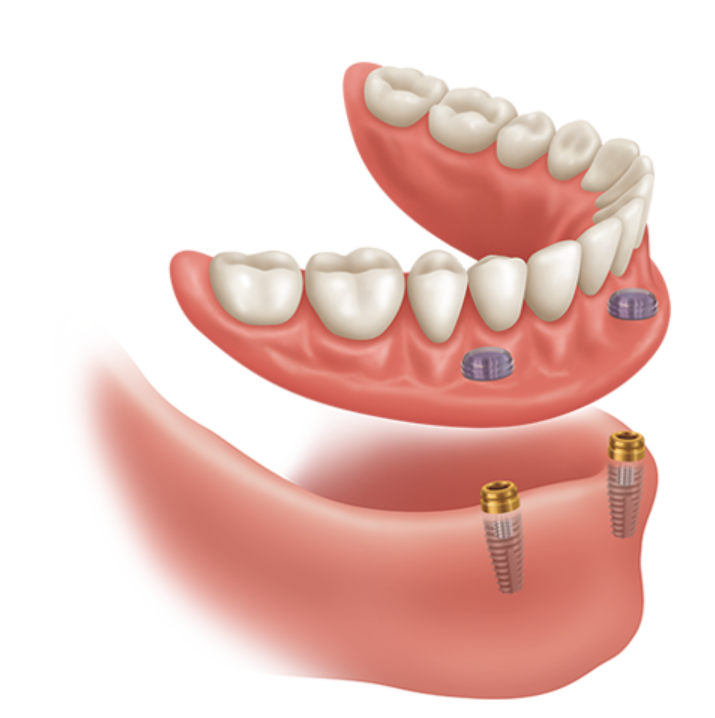
What Are Dental Implants?
A dental implant is a small post, commonly made from titanium, that serves as an artificial tooth root. It is placed into the jawbone where a natural tooth root once existed.
Once the implant heals and integrates with the surrounding bone, it can support a replacement tooth or other dental restoration.
A complete implant restoration generally includes three parts:
- Dental implant: The post placed in the jawbone
- Abutment: The connector attached to the implant
- Crown, bridge, or denture: The visible replacement teeth
This design allows dental implants to replace missing teeth without relying on neighboring natural teeth for support.
The goal isn’t simply to fill a space. Good implant treatment considers your bite, gum health, jawbone, facial appearance, and how your replacement teeth will function in everyday life.
Why Consider Dental Implants for Missing Teeth?
If you’ve been living with missing teeth for a while, you may have adapted to the gap. That doesn’t mean you have to keep living with it.
Missing teeth can affect chewing and speech. Tooth loss can also contribute to changes in the jawbone over time. The FDA notes that replacing lost teeth with dental implants may help restore chewing ability, appearance, and quality of life, while helping maintain the surrounding jawbone.
Dental implants may offer several advantages:
- A stable alternative to removable teeth
- A natural-looking replacement for missing teeth
- Support for crowns, bridges, or dentures
- Better chewing function
- Support for the jawbone around the missing tooth
- No need to grind down neighboring healthy teeth for a traditional bridge
- A long-term tooth replacement option when properly planned and maintained
That doesn’t mean implants are automatically the right answer for everyone. Your oral health, bone volume, gum health, medical history, and personal goals all matter.

Frequently Asked Questions About Dental Implants in Lakeland, FL
Are dental implants painful?
Dental implant placement is performed with anesthesia, and sedation may be available depending on the treatment and patient needs. Some soreness, swelling, or tenderness can occur after the procedure. Your dentist will provide instructions for managing recovery and tell you what symptoms should prompt a call to the office.
How long does the dental implant process take?
It depends on your treatment. A straightforward implant case may take several months from placement to the final restoration because the implant needs time to integrate with the jawbone. Bone grafting, extractions, gum treatment, or other procedures can make the timeline longer. Your dentist can give you a more useful estimate after examining your mouth.
Can I get dental implants if I have bone loss?
Possibly. Bone loss doesn’t automatically rule out dental implants. Depending on the location and amount of bone available, your treatment may involve bone grafting, ridge augmentation, a sinus lift, or another approach. A 3D scan can help your dentist evaluate your available bone and determine what options may be appropriate.
Are dental implants better than dentures?
Not necessarily for every patient. Dental implants are anchored in the jaw and can provide greater stability than traditional removable dentures. However, implants involve surgery and may cost more. Dentures can still be a practical choice for many people. The best option depends on your health, anatomy, goals, and budget.
How much do dental implants cost in Lakeland, FL?
There is no single implant price because treatment varies widely. A single implant with a crown is different from replacing several teeth or completing a full-arch restoration. The final cost may also include extractions, bone grafting, imaging, the implant, abutment, and restoration. Agoka Dental can review your treatment needs and explain the expected costs during your consultation.
Can smokers get dental implants?
Smoking can interfere with healing and may increase the risk of implant complications. That doesn’t mean every smoker is automatically excluded from treatment. Your dentist can discuss how tobacco use affects your individual situation and whether changing your smoking habits before and after treatment would improve your chances of successful healing.
How do I care for dental implants after treatment?
Care for your implants includes brushing, cleaning between your teeth, attending professional dental cleanings, and keeping regular checkups. Follow the specific instructions provided by your dental team. If an implant becomes loose, painful, or otherwise feels abnormal, contact your dentist promptly.
Our Process at a Glance
Discovery & Baselines
During your initial visit, we capture 3D cone beam scans, review your medical history, assess bone quality, and create a digital treatment plan showing implant positioning and final restoration design. You’ll leave with a detailed cost breakdown and timeline specific to your case.
Implementation
On surgery day, we place your implant(s) using surgical guides for precise positioning, provide detailed post-operative care instructions, and schedule your follow-up appointments. Most patients return to normal activities within 2 to 3 days with minimal discomfort managed through prescribed medications.
Optimization & Reporting
We monitor healing at 2-week and 8-week intervals, confirming successful osseointegration before taking final impressions for your custom crown or bridge. Once your permanent restoration is placed, we provide a personalized maintenance schedule and remain available for any questions throughout the life of your implant.
Dental Implant Options in Lakeland
Your treatment depends on how many teeth are missing and the condition of your mouth. There isn’t one implant solution that fits every patient.
Single-Tooth Dental Implants
If you’re missing one tooth, a single dental implant can support an individual crown.
The implant replaces the missing root, while the crown replaces the visible part of the tooth. Because the implant is independently supported, the neighboring teeth don’t have to be prepared as they would for a traditional bridge.
This can be a good option when a tooth has been lost because of decay, an injury, infection, or another dental problem.
Multiple Dental Implants
If several teeth are missing, multiple implants can support individual crowns or an implant-supported bridge.
An implant bridge can replace several missing teeth without requiring an implant for every tooth. The exact number and position of implants depend on your bone structure, the location of the missing teeth, your bite, and the planned restoration.
Implant-Supported Dentures
If you wear dentures but struggle with movement, looseness, or difficulty eating, implants may be used to provide additional support.
Implant-supported dentures are anchored to dental implants rather than resting only on the gums. Depending on the treatment plan, the restoration may be removable or fixed.
Full-Arch Dental Implants
Patients who have lost most or all of their teeth may benefit from a full-arch implant solution.
Full-arch treatment can use several strategically positioned implants to support a complete upper or lower arch of replacement teeth. Treatment may be described as All-on-4, All-on-X, or another full-arch implant approach depending on the number and placement of implants.
Agoka Dental’s current Lakeland implant information includes full-arch treatment and discusses temporary teeth during healing and permanent zirconia restorations as part of appropriate cases.
Are You a Candidate for Dental Implants?
Wondering if you’re too old, have too much bone loss, or have waited too long?
Don’t assume you’re not a candidate.
The best way to know is through an examination and implant consultation. Your dentist will evaluate your oral health, jawbone, gums, existing teeth, medical history, and treatment goals.
Factors that may be considered include:
- Amount and density of available jawbone
- Gum health
- Existing infection or decay
- Number and location of missing teeth
- Overall health
- Healing capacity
- Smoking or tobacco use
- Diabetes control
- Teeth grinding or clenching
- Oral hygiene habits
- Medications and medical conditions
The FDA also notes that overall health can affect implant candidacy, healing time, and how long an implant remains in place. Smoking may interfere with healing, while untreated periodontal disease and some medical conditions can increase complications.
So if you’ve been told in the past that dental implants aren’t possible, it may still be worth having a current evaluation. Your situation may have changed, or another treatment approach may be appropriate.
What If You Don’t Have Enough Bone for Dental Implants?
Bone loss is a common concern among people considering implants.
After a tooth is lost, the jawbone in that area no longer receives the same stimulation from a natural tooth root. Over time, bone volume can decrease.
That doesn’t always mean implants are off the table.
Depending on your anatomy, treatment may include procedures such as:
- Bone grafting
- Ridge augmentation
- Sinus lift
- Socket preservation after extraction
- Other implant-site preparation procedures
Your treatment plan should be based on your actual bone anatomy rather than a generic procedure.
That’s one reason 3D imaging can be useful. Agoka Dental’s implant treatment information describes 3D imaging and digital planning as part of its implant evaluation and treatment process.
The Dental Implant Process
A dental implant isn’t usually a single appointment. Treatment takes place in stages because your jaw needs time to heal around the implant.
Implant Consultation
Your first step is an evaluation.
You’ll discuss your missing teeth, dental history, concerns, goals, and treatment preferences. Your dentist will examine your mouth and may use digital X-rays or 3D CBCT imaging to evaluate the bone and surrounding structures.
This is also the time to ask questions about treatment options, expected appointments, recovery, restoration choices, and cost.
Treatment Planning
Once your examination is complete, your dentist develops a treatment plan based on your anatomy and needs.
The plan may involve a single implant, several implants, an implant-supported bridge, or a full-arch restoration.
If a tooth needs to be extracted or bone needs to be built up first, those steps are considered as part of the overall plan.
Implant Placement
The dental implant is placed into the jawbone.
Local anesthesia or appropriate sedation may be used based on the procedure and your needs. Agoka Dental’s existing implant content discusses sedation options as part of its approach to patient comfort.
Healing and Osseointegration
After placement, the implant needs time to integrate with the surrounding bone. This biological process is called osseointegration.
The timeline varies from patient to patient. Healing may take several months, particularly when additional procedures are required.
During this period, your dentist will tell you how to care for the area and when to return for follow-up visits.
Final Restoration
Once the implant has healed sufficiently, an abutment and final restoration can be placed.
Depending on your treatment, the final restoration may be:
- Implant crown
- Implant bridge
- Implant-supported denture
- Full-arch fixed teeth
The goal is to create a restoration that fits your bite and complements the shape and color of your smile.
3D Imaging and Digital Implant Planning
Precision starts before implant surgery.
Agoka Dental uses 3D imaging and digital treatment planning to evaluate the jaw and plan implant placement.
A CBCT scan creates a three-dimensional view of your oral structures. This can help your dental team assess available bone and plan around important anatomical structures.
Digital planning can also help the team visualize where the implant should be positioned in relation to the final restoration.
For you, that means your treatment isn’t based only on what can be seen during a routine dental examination. Your dentist can evaluate the area in much greater detail before treatment begins.
Dental Implants vs. Dentures and Bridges
You may be comparing dental implants with dentures or a traditional bridge. Each option has a place in dentistry.
Dental Implants
Implants are anchored in the jaw and can support crowns, bridges, or dentures. They don’t need to be removed simply because they are implant-supported.
Traditional Bridges
A traditional bridge replaces one or more missing teeth by using neighboring teeth as support. This can be a practical option in the right situation, but the supporting teeth must be prepared for the bridge.
Removable Dentures
Dentures can replace several or all missing teeth without implant surgery. They’re removable and may be appropriate for patients who aren’t candidates for implants or who prefer a removable option.
The right choice depends on your oral health, anatomy, budget, preferences, and long-term goals. A good consultation should explain the pros and cons of each option instead of pushing you toward one treatment.
How Much Do Dental Implants Cost in Lakeland, FL?
Dental implant cost is one of the first questions most patients ask.
The honest answer is that there isn’t one price for every patient.
The total cost may depend on:
- Number of implants needed
- Type of implant restoration
- Whether teeth need to be extracted
- Bone grafting or other preparatory procedures
- Type of crown, bridge, or denture
- Materials used
- Complexity of your bite and jaw anatomy
- Number of appointments involved
A single-tooth implant and a full-arch restoration are very different treatments, so they shouldn’t be compared using the same price.
During your dental implant consultation at Agoka Dental, ask what is included in your treatment estimate. You can also discuss insurance benefits, financing options, and available payment arrangements before committing to treatment.
How Long Do Dental Implants Last?
Dental implants are intended to provide long-term tooth replacement, but no dental treatment is maintenance-free.
The implant itself and the restoration have different maintenance needs. Your gums and the tissues around the implant also need ongoing care.
Good habits include:
- Brush twice a day
- Clean between your teeth every day
- Follow your dentist’s implant-care instructions
- Keep regular dental cleaning appointments
- Attend implant checkups
- Manage gum disease promptly
- Avoid smoking
- Address teeth grinding if you clench or grind
The FDA recommends careful oral hygiene and regular visits with your dental provider after implant treatment. If an implant becomes loose or painful, contact your dental provider promptly.
Caring for Your Dental Implants
One common misconception is that implants can’t develop problems because they aren’t natural teeth.
That’s not true.
The implant isn’t susceptible to a cavity in the same way a natural tooth is, but the gums and bone around an implant still need care. Inflammation and infection around implants can cause serious problems if left untreated.
Your home routine should include brushing, cleaning between the teeth, and following the specific instructions provided by your dental team.
Professional cleanings and regular dental examinations also matter. Your dentist can check the implant, restoration, bite, gums, and surrounding teeth.
Dental Implants for Lakeland, FL Patients
Agoka Dental serves patients looking for dental implants in Lakeland and surrounding communities throughout the area.
Whether you’re near Downtown Lakeland, South Lakeland, North Lakeland, Lakeland Highlands, Lake Hollingsworth, Lake Morton, Cleveland Heights, Dixieland, Lake Beulah, Lake Bonny, Lake Gibson, Medulla, Grasslands, Bridgewater, Gateway, Oakbridge, or Oakbridge East, the first step is the same: get an evaluation of your individual situation.
You don’t need to decide on an implant procedure before your consultation.
You just need to find out what’s possible.
Why Choose Agoka Dental for Dental Implants?
Choosing an implant dentist isn’t just about finding someone who can place an implant. You want a dental practice that can evaluate your entire mouth and explain how the implant fits into your long-term oral health.
Agoka Dental provides dental care in Lakeland with a focus on restorative, cosmetic, preventive, and implant dentistry.
Our implant-related care includes:
- Dental implant consultations
- 3D imaging and digital treatment planning
- Single-tooth implants
- Multiple-tooth replacement
- Implant-supported bridges
- Implant-supported dentures
- Full-arch implant treatment
- Implant restorations
- Related restorative dental care
- Follow-up and maintenance
Agoka Dental’s existing Lakeland content also describes digital imaging, CBCT technology, digital impressions, computer-guided implant planning, and zirconia restoration options.
Most importantly, your treatment should start with an honest discussion. If an implant isn’t the best choice for you, you should know that. If there are steps you need before implant placement, you should understand why.
That’s what a good dental consultation is for.
Schedule a Dental Implant Consultation in Lakeland
You don’t have to keep adjusting your life around missing teeth.
If you’re considering a single dental implant, an implant-supported bridge, implant dentures, or full-arch dental implants, Agoka Dental can evaluate your smile and explain your options.
Start with a consultation. We’ll look at your teeth, gums, jawbone, and overall oral health, then discuss what makes sense for your situation.
Looking for a dental implant dentist in Lakeland, FL? Contact Agoka Dental to schedule your consultation and take the next step toward a stable, natural-looking replacement for your missing teeth.
Patient Testimonials
Real Stories from Real Tampa Patients



Make an Appointment
Ready to take the next step toward a healthier, more beautiful smile? Fill out the form below and one of our team members will contact you to confirm your visit. We’re here to make your experience easy and stress-free.
OR CALL US NOW
(813) 879-9000
Prefer to speak with someone directly? We’re happy to help!
Let’s get you scheduled — your smile deserves it.