
Crowns & Bridges in Wesley Chapel, FL
A damaged, weakened, or missing tooth can make everyday things harder. You may notice pain when you bite, avoid certain foods, feel self-conscious about a gap, or simply worry that a damaged tooth will get worse.
Dental crowns and bridges can help restore the way your teeth look and function while protecting your remaining natural teeth.
Free Consultation
Have questions? Contact us now for a free consultation and expert guidance for all your dental issues.
At Agoka Dental, patients in Wesley Chapel, FL can discuss their dental concerns with a dentist and learn which restorative option makes sense for their smile.
Depending on your needs, treatment may involve a dental crown, fixed dental bridge, dental implant restoration, or another approach.
The goal isn’t simply to cover a tooth or fill a space. Your dentist needs to consider the health of the tooth, surrounding gum tissue, bite alignment, remaining tooth structure, and your long-term oral health.
If you’re dealing with a cracked, broken, badly decayed, worn, or missing tooth, schedule a dental examination at Agoka Dental to discuss your options.
What Are Dental Crowns and Bridges?
Crowns and bridges are fixed dental restorations used for different problems.
A dental crown covers an individual tooth. Think of it as a protective cap that fits over a prepared tooth. Crowns are commonly considered when a tooth has lost too much structure for a filling to provide enough support, or when a tooth has been cracked, badly damaged, heavily restored, or treated with root canal therapy.
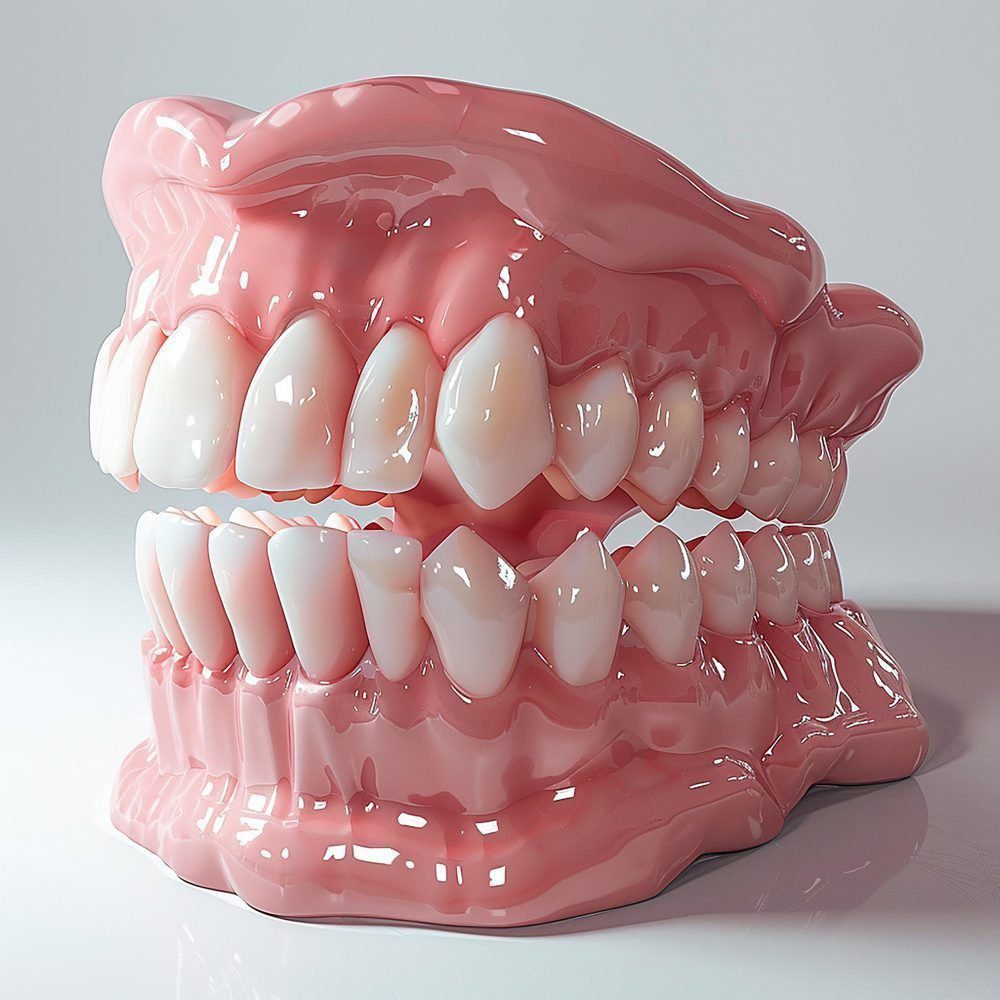
A dental bridge replaces one or more missing teeth. A bridge uses supporting teeth or, in some cases, dental implants to hold one or more artificial teeth in the space.
Both treatments can restore chewing function and help improve the appearance of your smile. The right choice depends on your particular dental condition.
Dental Crowns for Cracked or Damaged Teeth
A cracked tooth can be frustrating because the symptoms aren’t always obvious.
You might feel a sharp sensation when chewing. You may notice sensitivity to hot or cold. In other cases, the tooth may look normal even though it has been weakened.
A crown can sometimes protect a tooth that still has enough healthy structure to be restored.
However, not every crack can be treated with a crown. If the damage extends too far below the gum or involves the tooth root in a way that makes the tooth unrestorable, extraction or another treatment may need to be considered.
Getting an evaluation early can help your dentist determine what can realistically be saved.
Frequently Asked Questions About Crowns & Bridges
How do I know if I need a dental crown?
You may need a crown when a tooth is significantly weakened, cracked, broken, heavily restored, severely decayed, or needs additional protection after root canal treatment. Your dentist needs to examine the tooth before determining whether a crown is appropriate. In some cases, a filling, inlay, onlay, bonding, or another treatment may be a better choice.
Is getting a dental crown painful?
The tooth is typically numbed during preparation, so you shouldn’t feel the preparation itself. Some people experience temporary sensitivity or gum tenderness afterward. If you’re nervous about dental treatment, tell your dental team before the procedure so they can discuss ways to make your visit more comfortable.
How long does it take to get a dental crown?
Treatment time varies based on the tooth, restoration, laboratory process, and technology available at the dental office. Some crowns require more than one appointment. Ask Agoka Dental how many visits your particular treatment is likely to require.
How long does a dental bridge last?
A bridge can last for many years, but there is no guaranteed lifespan for every patient. Oral hygiene, gum health, bite forces, tooth grinding, the supporting teeth, restoration material, and regular dental care can all affect longevity.
Can a dental bridge replace more than one missing tooth?
Yes, bridges can be designed to replace more than one consecutive missing tooth in appropriate cases. Whether a bridge is suitable depends on the location and number of missing teeth and the health of the supporting teeth or implants.
Is a bridge better than a dental implant?
Neither is automatically better for everyone. A traditional bridge and an implant-supported restoration work differently. Your dentist should consider your gum health, bone, supporting teeth, bite, treatment goals, timeline, and budget before recommending an option.
What should I do if my crown or bridge becomes loose?
Contact your dentist rather than trying to permanently repair it yourself. A loose restoration can have different causes, including problems with the restoration or the supporting tooth. Prompt evaluation can help determine what needs to be done next.
Our Process at a Glance
Discovery & Baselines
During your initial visit, we capture 3D cone beam scans, review your medical history, assess bone quality, and create a digital treatment plan showing implant positioning and final restoration design. You’ll leave with a detailed cost breakdown and timeline specific to your case.
Implementation
On surgery day, we place your implant(s) using surgical guides for precise positioning, provide detailed post-operative care instructions, and schedule your follow-up appointments. Most patients return to normal activities within 2 to 3 days with minimal discomfort managed through prescribed medications.
Optimization & Reporting
We monitor healing at 2-week and 8-week intervals, confirming successful osseointegration before taking final impressions for your custom crown or bridge. Once your permanent restoration is placed, we provide a personalized maintenance schedule and remain available for any questions throughout the life of your implant.
When Might You Need a Dental Crown?
A crown may be recommended when a tooth needs more protection than a filling can provide.
Common situations include:
- A tooth with significant decay
- A cracked or broken tooth
- A weakened tooth with a large filling
- A tooth that has lost substantial natural structure
- A tooth that has undergone root canal treatment
- A severely worn tooth
- A tooth with a structural defect
- A damaged tooth that needs additional support
- A tooth that needs restoration for functional or cosmetic reasons
A crown isn’t automatically the best answer for every damaged tooth. Sometimes a filling, inlay, onlay, bonding, or another treatment may preserve more natural tooth structure.
That’s why an examination matters.
Your dentist can evaluate the enamel, dentin, dental pulp, tooth root, gums, bite, and surrounding teeth before recommending treatment.
Crowns After Root Canal Treatment
A tooth that has received root canal therapy may need additional protection because substantial tooth structure can have been lost from decay, previous restorations, or the treatment itself.
In appropriate cases, a dental crown can cover and reinforce the remaining tooth structure.
The timing and type of restoration depend on the tooth, the amount of remaining structure, your bite, and other clinical factors. Your dentist can explain whether a crown is recommended after your root canal treatment.
What Is a Dental Bridge?
A dental bridge replaces one or more missing teeth by spanning the open space.
A traditional fixed bridge generally includes crowns or other supporting components attached to teeth next to the gap, with an artificial tooth, called a pontic, occupying the space.
For some patients, implant-supported restorations may be another option. Dental implants replace the role of a tooth root and can support an implant crown or bridge.
A bridge may be worth discussing if you have a missing tooth but still have suitable supporting teeth.
The best choice isn’t based only on appearance. Your dentist will also consider the health and strength of the teeth around the missing space, gum health, bite forces, location of the missing tooth, and your overall oral health.
Why Replace a Missing Tooth?
A missing tooth can affect more than your smile.
The teeth around an empty space can shift over time. Changes in tooth position can affect your bite and make some areas harder to clean.
A missing tooth may also affect chewing and speaking, depending on its location.
Replacing the tooth can restore the missing space and help bring function back to your smile.
A dental bridge is one possible option. Dental implants, implant-supported bridges, or removable dental appliances may be alternatives depending on your situation.
The right treatment should be based on your oral health rather than a one-size-fits-all recommendation.
Crowns vs. Bridges: What’s the Difference?
The easiest way to think about the two treatments is this:
A crown restores a tooth. A bridge replaces a missing tooth or teeth.
For example, if you have a badly damaged molar that can still be saved, your dentist may discuss a crown.
If you have lost a tooth and have healthy supporting structures around the gap, your dentist may discuss a dental bridge.
Some patients need both. A crown may restore a damaged tooth while a bridge replaces a neighboring missing tooth.
And sometimes an implant-supported restoration may make more sense than a traditional bridge.
During your consultation, Agoka Dental can evaluate the situation and explain the available options.
What Happens During Crown or Bridge Treatment?
The exact process varies based on your treatment, but a typical restoration involves several stages.
1. Dental Examination
Your dentist first evaluates the tooth or missing-tooth area.
This may include an oral examination and dental X-rays when appropriate. The goal is to understand the condition of the tooth, roots, gums, surrounding bone, and neighboring teeth.
2. Treatment Planning
Your dentist discusses what is causing the problem and whether a crown, bridge, implant restoration, or another treatment is appropriate.
This is also the time to ask about materials, expected treatment time, maintenance, and estimated costs.
3. Tooth Preparation
If a crown or traditional bridge is recommended, the supporting tooth or teeth may need to be prepared so the restoration can fit correctly.
The amount of preparation depends on the tooth and the type of restoration being used.
4. Impressions or Digital Records
Your dentist may take traditional impressions or digital records to help create a restoration that fits your mouth.
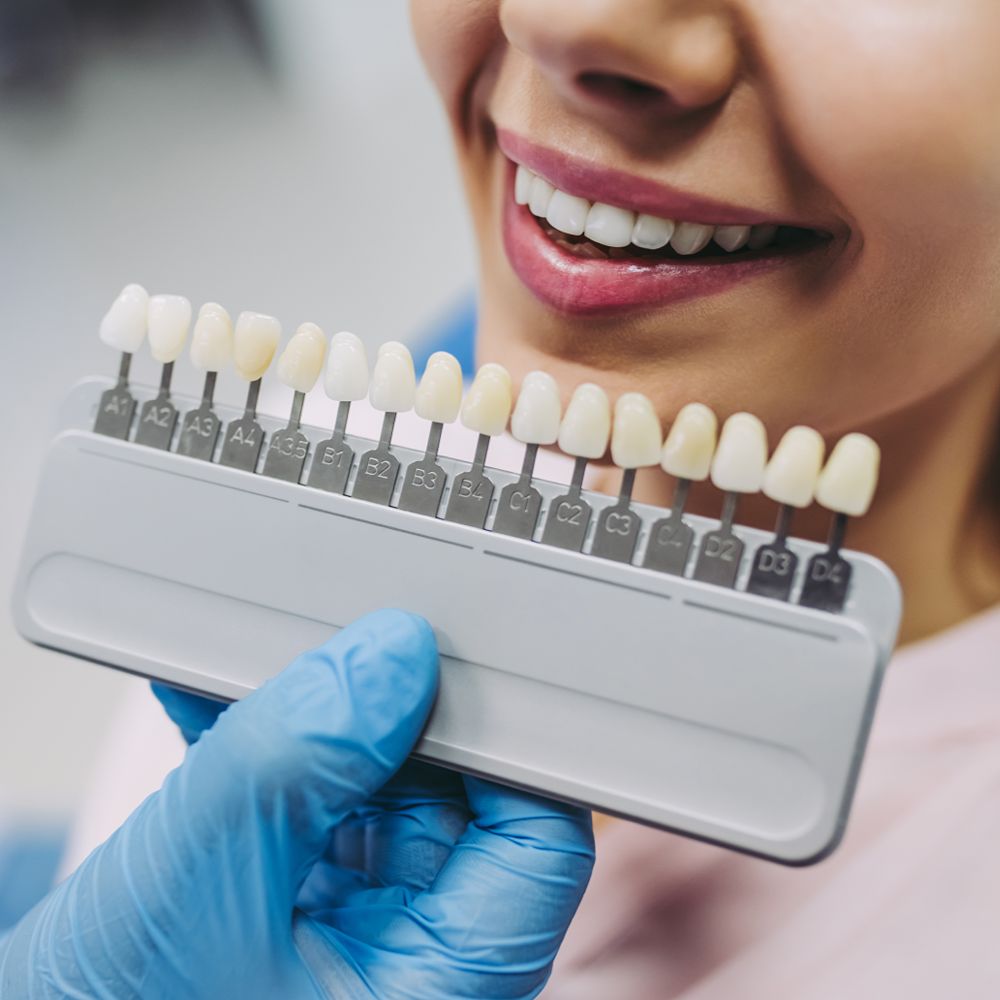
Shade matching may also be considered when the restoration is visible in your smile.
5. Temporary Restoration
Depending on the treatment and laboratory process, you may receive a temporary crown or bridge while the permanent restoration is being made.
Your dentist will explain how to care for it during this period.
6. Final Crown or Bridge Placement
Once the permanent restoration is ready, your dentist checks its fit, appearance, and bite.
Adjustments may be made before final cementation.
A good fit matters. The restoration should work with the surrounding teeth rather than interfere with your normal bite.
What Materials Are Used for Crowns and Bridges?
Dental restorations can be made from different materials.
Depending on your needs and what is clinically appropriate, options may include:
- Porcelain
- Dental ceramic
- Zirconia
- Porcelain-fused-to-metal
- Metal alloys
- Other tooth-colored restorative materials
There isn’t one material that is best for every patient.
The location of the tooth, biting forces, cosmetic expectations, remaining tooth structure, and other factors can influence the recommendation.
If you’re concerned about how your crown or bridge will look, ask about the available materials during your consultation.
Will a Crown or Bridge Look Natural?
Modern dental restorations can be designed to blend with surrounding teeth in color and shape.
For visible teeth, shade matching and the shape of the restoration can make a noticeable difference.
Still, the final appearance depends on several factors, including the material selected, the condition of the surrounding teeth, the gum tissue, and the restoration’s design.
If appearance is a major concern, tell your dentist before treatment begins. It gives you a chance to discuss realistic cosmetic expectations and material choices.
How Long Do Crowns and Bridges Last?
There isn’t a single lifespan that applies to every crown or bridge.
How long a restoration lasts can depend on factors such as:
- Oral hygiene
- Gum health
- Tooth decay around the restoration
- Bite forces
- Teeth grinding or clenching
- The restoration material
- The health of supporting teeth
- Regular dental examinations
- Diet and everyday habits
A crown or bridge isn’t maintenance-free.
Brush twice a day, clean carefully around your restoration, and keep up with regular dental visits. If you grind or clench your teeth, ask your dentist whether additional protection may be appropriate.
Caring for Your Dental Crown or Bridge
Good daily care can help protect your restoration and the teeth supporting it.
Brush your teeth twice a day with a soft-bristle toothbrush and fluoride toothpaste unless your dentist recommends something different.
If you have a bridge, cleaning underneath and around the artificial tooth is especially important. Depending on the design of your bridge, your dentist or hygienist may show you how to use floss, a floss threader, an interdental cleaner, or another cleaning method.
Don’t ignore bleeding gums, persistent sensitivity, a loose restoration, pain when chewing, or changes in the way your teeth come together.
These signs don’t always mean the restoration has failed, but they deserve attention.
What If Your Crown or Bridge Feels Loose?
A loose crown or bridge should be checked by a dentist.
Don’t try to permanently glue a restoration back yourself. A dentist needs to determine why it became loose and whether the supporting tooth or teeth have developed decay, damage, or another problem.
If your restoration falls out, keep it in a clean container and contact your dental office for instructions.
Getting help promptly can make it easier to protect the underlying tooth and determine the next step.
Crown or Bridge vs. Dental Implant
Patients often ask whether they should choose a bridge or dental implant.
The answer depends on your oral health and treatment goals.
A traditional bridge uses surrounding teeth as support. A dental implant is placed into the jawbone and can support an individual crown or implant-supported bridge.
Implants may offer advantages in some situations, but they’re not right for everyone. Bone levels, gum health, medical history, treatment needs, timing, and cost can all affect the decision.
You don’t need to make that decision alone.
A dental examination can help you compare the options and understand the advantages and limitations of each approach.
How Much Do Dental Crowns and Bridges Cost in Wesley Chapel?
The cost of crowns and bridges varies from patient to patient.
Several factors can affect the final price, including:
- Number of teeth being treated
- Type of restoration
- Material selected
- Condition of the tooth
- Need for additional treatment
- Whether a temporary restoration is required
- Whether an implant is involved
- Dental insurance benefits
- Laboratory costs
A low advertised price doesn’t necessarily represent the total cost of treatment.
At Agoka Dental, ask for an explanation of the recommended treatment and associated fees before moving forward. If you have dental insurance, you can also ask what your plan may cover and what your estimated out-of-pocket portion could be.
Crowns & Bridges in Wesley Chapel, FL
If you’re searching for dental crowns in Wesley Chapel, FL or dental bridges in Wesley Chapel, FL, choosing a local dental office gives you a convenient place to discuss your options and receive ongoing care.
Agoka Dental serves patients looking for restorative dental care in Wesley Chapel and the surrounding area.
Patients may come from communities around Wesley Chapel, including areas near Wiregrass, Seven Oaks, Meadow Pointe, New Tampa, Land O’ Lakes, Lutz, and other nearby communities. Your actual service area may vary, so contact the office to confirm whether Agoka Dental serves your location.
Whether you’re dealing with one damaged tooth, a missing tooth, or several dental concerns, the first step is a proper evaluation.
Why Choose Agoka Dental for Crowns & Bridges?
Restorative dentistry is about more than placing a restoration.
Your dentist needs to understand why the tooth is damaged or why the tooth was lost in the first place. The health of your gums, remaining teeth, bite, and surrounding structures all matter.
At Agoka Dental, patients can discuss their concerns, ask questions, and learn about appropriate treatment options before making a decision.
Your consultation is also a good time to ask:
- Can this tooth be saved?
- Do I need a crown or another restoration?
- Is a bridge right for my missing tooth?
- Would an implant be a better option?
- What material is recommended?
- How many visits should I expect?
- How should I care for the restoration?
- What will my estimated cost be?
Good dental care starts with clear answers.
If you’re in Wesley Chapel, New Tampa, Land O’ Lakes, Lutz, or another nearby community and need to replace or restore a damaged or missing tooth, contact Agoka Dental to schedule a consultation.
Schedule a Crowns & Bridges Consultation in Wesley Chapel
You don’t have to keep putting off treatment because you’re unsure what you need.
Whether you’re dealing with a cracked tooth, extensive decay, a missing tooth, an old restoration, or discomfort when chewing, Agoka Dental can evaluate your smile and explain your restorative options.
Contact Agoka Dental today to schedule a crowns and bridges consultation in Wesley Chapel, FL.
Patient Testimonials
Real Stories from Real Tampa Patients



Make an Appointment
Ready to take the next step toward a healthier, more beautiful smile? Fill out the form below and one of our team members will contact you to confirm your visit. We’re here to make your experience easy and stress-free.
OR CALL US NOW
(813) 879-9000
Prefer to speak with someone directly? We’re happy to help!
Let’s get you scheduled — your smile deserves it.