
Dental Crowns & Bridges in Clearwater, FL
A damaged or missing tooth can affect much more than your smile. You may notice pain when you chew, sensitivity to hot or cold foods, trouble biting evenly, or simply feel uncomfortable showing your teeth. Sometimes the problem is obvious, such as a broken molar. Other times, a tooth has slowly weakened from decay, a large filling, wear, or a previous root canal.
Free Consultation
Have questions? Contact us now for a free consultation and expert guidance for all your dental issues.
At Agoka Dental, we provide dental crowns and bridges in Clearwater, FL to help restore damaged teeth and replace missing ones. Our goal is simple: help you get back to eating, speaking, and smiling comfortably with a restoration that fits your mouth and looks natural.
A dental crown covers and protects a damaged or weakened tooth. A dental bridge replaces one or more missing teeth by filling the space between healthy supporting teeth or, in appropriate cases, dental implants.
The right choice depends on your teeth, gums, bite, bone support, and overall oral health. That’s why treatment starts with an examination rather than a one-size-fits-all recommendation.
What Are Dental Crowns and Bridges?
Crowns and bridges are fixed dental restorations used for different problems.
A dental crown is a tooth-shaped restoration that fits over a prepared tooth. It can strengthen a tooth that has lost a large amount of structure and restore its shape, appearance, and chewing function.
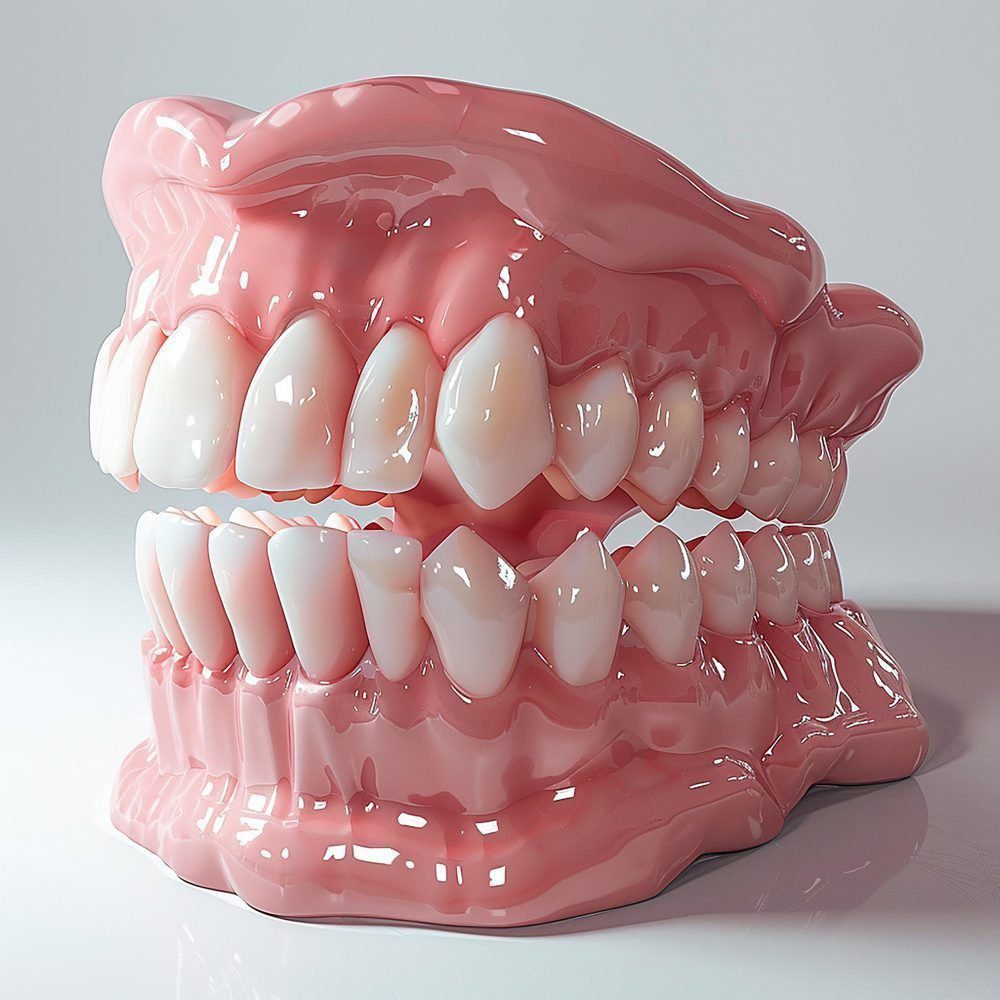
A dental bridge replaces a missing tooth or several missing teeth in a row. A bridge includes a replacement tooth called a pontic. Depending on the type of bridge, the pontic may be supported by crowns placed on neighboring teeth or by dental implants.
Both treatments can give you a stable alternative to leaving a damaged tooth untreated or living with an open space after tooth loss.
When Might You Need a Dental Crown?
A crown may be recommended when a tooth needs more protection than a filling or bonding can provide.
Common reasons include:
- A cracked or broken tooth
- Severe tooth decay
- A tooth weakened by a large filling
- A badly worn tooth
- A tooth that has lost significant structure
- Protection after root canal therapy
- Restoration of a damaged tooth
- Replacement of an older or failing crown
- Restoration of a dental implant
Not every damaged tooth needs a crown. In some cases, a filling, bonding, inlay, onlay, or other conservative treatment may be enough.
That’s an important distinction. A good restoration plan isn’t about choosing the biggest treatment. It’s about choosing the treatment that makes sense for the amount of healthy tooth structure that remains.
Frequently Asked Questions About Crowns & Bridges
How do I know if I need a crown or a filling?
A filling may be enough when a tooth has a smaller amount of damage and enough healthy structure remains. A crown may be considered when a tooth is significantly weakened, cracked, heavily restored, or has lost substantial structure. Your dentist can evaluate the tooth and recommend the most conservative option that provides appropriate support.
Is getting a dental crown painful?
The procedure is performed with local anesthesia to keep you comfortable during tooth preparation. You may have some sensitivity or soreness afterward, but significant or persistent pain should be reported to your dentist.
How long does it take to get a dental crown?
Treatment time varies based on the tooth, restoration, and laboratory process. Some crowns require more than one appointment. The exact timeline can be explained after your examination. Same-day crown treatment should only be discussed when that service is available for your specific case.
Are dental bridges better than implants?
Neither is automatically better for every patient. A traditional bridge uses supporting teeth, while an implant replaces the missing tooth root and can support a crown or bridge. Your bone, gums, neighboring teeth, overall health, treatment goals, timeline, and budget all affect the decision.
Can a dental bridge replace more than one missing tooth?
Yes. Bridges can replace more than one missing tooth in certain situations. The design depends on where the teeth are missing and whether the supporting teeth or implants can safely handle the forces placed on the restoration.
How should I clean under a dental bridge?
You need to clean around the supporting teeth and underneath the replacement tooth, or pontic. Your dentist or hygienist can demonstrate the best technique for your specific bridge. Daily cleaning is important because plaque and food can collect beneath the restoration.
Does dental insurance cover crowns and bridges?
Coverage varies by dental plan. Some plans provide benefits for certain restorative procedures, while others have waiting periods, exclusions, deductibles, or annual limits. Agoka Dental can help you understand the treatment being recommended, while your insurance provider can confirm your specific benefits and coverage.
Our Process at a Glance
Discovery & Baselines
During your initial visit, we capture 3D cone beam scans, review your medical history, assess bone quality, and create a digital treatment plan showing implant positioning and final restoration design. You’ll leave with a detailed cost breakdown and timeline specific to your case.
Implementation
On surgery day, we place your implant(s) using surgical guides for precise positioning, provide detailed post-operative care instructions, and schedule your follow-up appointments. Most patients return to normal activities within 2 to 3 days with minimal discomfort managed through prescribed medications.
Optimization & Reporting
We monitor healing at 2-week and 8-week intervals, confirming successful osseointegration before taking final impressions for your custom crown or bridge. Once your permanent restoration is placed, we provide a personalized maintenance schedule and remain available for any questions throughout the life of your implant.
When Is a Dental Bridge a Good Option?
A dental bridge can replace one or more missing teeth when the surrounding conditions are suitable.
You may be a candidate if:
- You’re missing one or several teeth in a row
- The neighboring teeth can provide adequate support
- You want a fixed replacement rather than a removable partial denture
- You want to restore chewing function
- You want to fill a visible gap in your smile
- An implant isn’t the right choice for you, or you prefer another treatment path
A traditional bridge usually relies on abutment teeth, which are the teeth supporting the restoration. The artificial replacement tooth, or pontic, sits in the space left by the missing tooth.
There are also other bridge designs. A cantilever bridge uses support from one side, while implant-supported bridges use dental implants rather than natural teeth for support. Whether these options are appropriate depends on your specific dental condition.
Dental Crowns vs. Dental Bridges: What’s the Difference?
The easiest way to remember the difference is this:
A crown restores a tooth you still have. A bridge replaces a tooth you have lost.
For example, suppose you have a cracked molar but the tooth can still be saved. A crown may cover the tooth and protect it from further damage.
Now suppose you lost a tooth between two healthy teeth. A bridge may fill that space using the neighboring teeth as support.
Dental implants are another option for missing teeth. Unlike a traditional bridge, an implant replaces the missing tooth root and can support an individual crown or bridge.
During your examination, we can discuss the advantages and limitations of each option rather than assuming one restoration is right for everyone.
What Happens During a Dental Crown or Bridge Procedure?
The exact process depends on the restoration you need, but most treatments follow several basic stages.
1. Examination and Treatment Planning
First, your dentist evaluates the tooth or missing-tooth area. This may include a visual examination, dental X-rays, and other diagnostic steps when needed.
The condition of your gums, supporting teeth, bite, and remaining tooth structure all matter.
If you’re experiencing pain or have a broken tooth, the dentist also needs to determine whether the tooth can be restored or needs another form of treatment first.
2. Preparing the Tooth or Supporting Teeth
For a crown, the damaged tooth is carefully prepared so the restoration can fit over it properly.
For a traditional bridge, the supporting teeth may need to be prepared to accommodate the crowns that hold the bridge in place.
This part can sound intimidating, but your dentist will explain what needs to be done and why before treatment begins.
3. Impressions or Digital Scanning
Your dentist needs an accurate record of your teeth and bite to create a restoration that fits properly.
Depending on the treatment plan and technology available, impressions or digital scanning may be used.
Accurate measurements help the dental laboratory create the shape, size, and fit needed for your restoration.
4. Temporary Restoration When Needed
If your final crown or bridge requires laboratory fabrication, a temporary restoration may be placed while you wait for the permanent one.
This protects the prepared area and allows you to continue using your teeth during the fabrication period.
Follow your dentist’s instructions during this stage. Temporary restorations aren’t designed to function exactly like your permanent restoration.
5. Final Fitting and Placement
Once the final crown or bridge is ready, your dentist checks its fit, appearance, contacts, and bite.
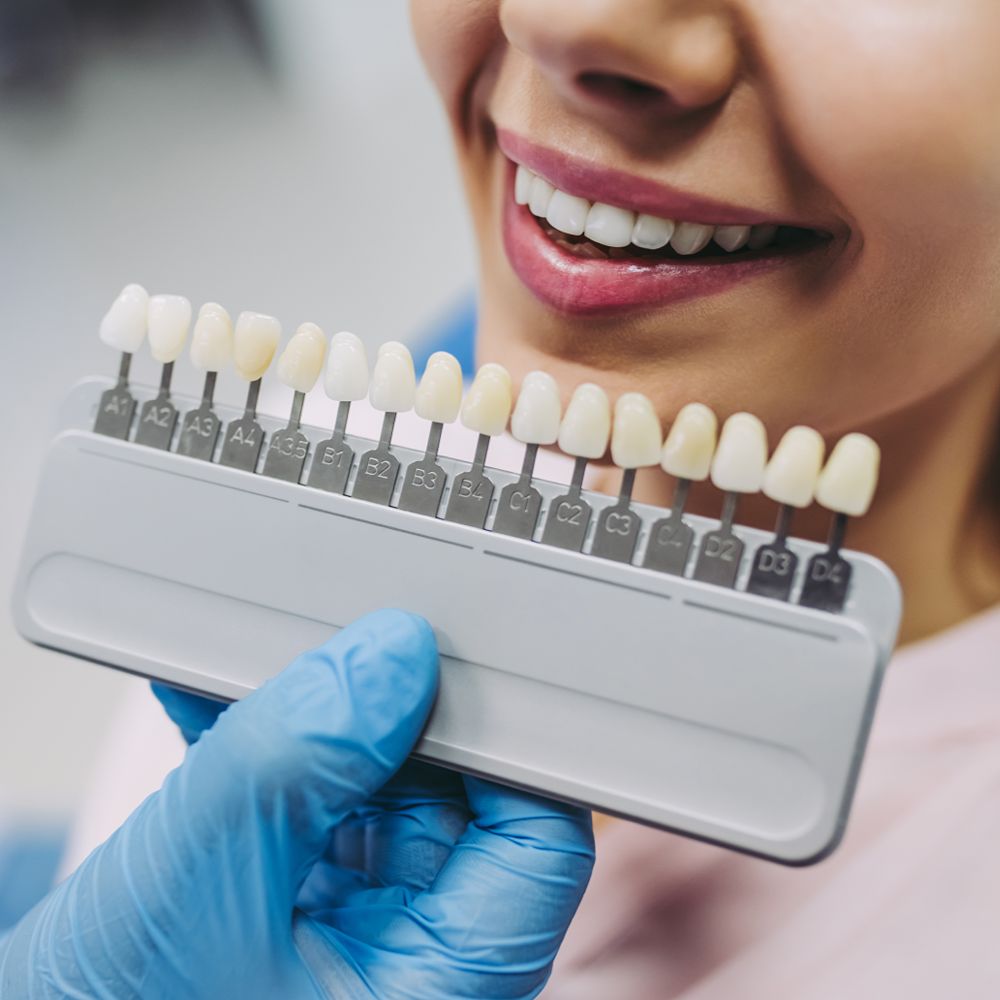
Shade matching is also important for visible teeth. A restoration should complement the surrounding teeth rather than look obviously separate.
If the bite feels uneven, adjustments can usually be made before the restoration is permanently placed.
Which Materials Are Used for Crowns and Bridges?
Dental restorations can be made from different materials. The best material depends on factors such as the location of the tooth, bite forces, appearance, available space, and your dental needs.
Common materials include:
Porcelain and Ceramic
Porcelain and ceramic restorations can provide a natural-looking appearance and are often selected when aesthetics matter.
They can be shade-matched to neighboring teeth and are especially useful when the restoration is visible when you smile.
Zirconia
Zirconia is a strong ceramic material used in many types of dental restorations. It can offer a combination of strength and tooth-colored appearance.
Whether zirconia is the right choice depends on your individual situation.
Porcelain-Fused-to-Metal
These restorations combine a metal structure with a tooth-colored outer layer. They have been used in restorative dentistry for many years.
Metal Restorations
Certain metal materials may still have a place in restorative dentistry, particularly in situations where strength is a major consideration.
Your dentist can explain the material options available for your restoration and why one may make more sense than another.
What If Your Tooth Needs a Root Canal?
A tooth that has undergone root canal therapy may need additional protection, particularly when substantial tooth structure has been lost.
Root canal treatment addresses infection or inflammation inside the tooth. A crown may then be used to protect the remaining tooth structure and restore its function.
The two treatments serve different purposes.
Root canal therapy treats the inside of the tooth. A crown restores and protects the tooth afterward when a crown is clinically appropriate.
If you have a painful or severely damaged tooth, don’t assume you automatically need an extraction. Some teeth can be saved with appropriate treatment.
What If You’re Missing a Tooth?
You don’t necessarily have to live with a missing tooth.
Depending on your oral health and preferences, replacement options may include:
- Traditional dental bridge
- Implant-supported bridge
- Dental implant with a crown
- Partial denture
- Other restorative options
A bridge can restore the visible space and chewing surface without requiring a removable appliance.
An implant-supported restoration takes a different approach by using an implant as the foundation. Implants may also help preserve bone in the area of tooth loss, but they aren’t right for every patient.
Your dentist can compare these choices based on your bone support, gum health, neighboring teeth, treatment goals, timeline, and budget.
Why Replace a Missing Tooth?
A missing tooth isn’t only a cosmetic issue.
Depending on its location and your overall bite, leaving a space can affect how you chew. Neighboring teeth can also move into the open area over time.
A missing tooth may also change the way your remaining teeth contact each other.
Replacing the tooth can help restore chewing function and provide a more complete smile.
That doesn’t mean every missing tooth requires the same treatment. The location and condition of your other teeth matter.
How Long Do Crowns and Bridges Last?
There isn’t one guaranteed lifespan for every crown or bridge.
Longevity depends on the restoration itself, the supporting teeth, your bite, oral hygiene, gum health, diet, grinding or clenching habits, and regular dental care.
A well-maintained restoration can last for many years, but it isn’t indestructible.
To help protect your investment:
- Brush twice a day
- Clean between your teeth every day
- Keep regular dental appointments
- Don’t use your teeth to open packages
- Avoid chewing extremely hard objects
- Tell your dentist if you grind or clench your teeth
- Report sensitivity, looseness, pain, or a damaged restoration promptly
A crown or bridge also doesn’t make the tooth underneath immune to decay. The edges still need careful cleaning.
Caring for Your Crown or Bridge
Good home care is one of the biggest factors in maintaining a dental restoration.
Brush around the crown or bridge as you would your natural teeth. Clean along the gumline, where plaque can collect.
If you have a bridge, cleaning underneath the pontic is especially important. Your dentist or hygienist can show you techniques and tools that make this easier.
Regular checkups also allow your dental team to watch the restoration and the teeth supporting it.
If you notice a crown feels loose, a bridge moves, your bite suddenly feels different, or you develop pain, contact your dental office rather than waiting for the problem to get worse.
Dental Crowns and Bridges in Clearwater, FL
Agoka Dental provides restorative dental care for patients in Clearwater and surrounding communities. Our Clearwater services include crowns and bridges along with general, cosmetic, replacement, implant, periodontal, and emergency dental care.
That matters because restorative treatment rarely exists in isolation.
A damaged tooth might also need root canal therapy. A missing tooth may raise the question of a bridge versus an implant. Gum disease may need attention before a restoration is placed. A worn bite may affect how a crown or bridge should be designed.
Having access to related dental services allows your treatment plan to account for the condition of your mouth as a whole.
Agoka Dental has served its community for 30 years and emphasizes friendly, compassionate dental care.
Whether you’re near Downtown Clearwater, Clearwater Beach, Island Estates, Sand Key, Countryside, Feather Sound, or another part of the Clearwater area, the first step is an examination to determine what your tooth or missing-tooth area actually needs.
Why Choose Agoka Dental for Crowns & Bridges?
Choosing a dentist for restorative work isn’t just about finding someone who offers crowns and bridges.
You want to understand what is happening with your tooth, what your options are, and what the treatment is expected to accomplish.
At Agoka Dental, you can expect care centered on:
- A careful dental examination
- Clear explanations of treatment options
- Restorative and general dental services in one practice
- Attention to tooth function as well as appearance
- Treatment planning based on your individual dental condition
- Patient education
- Follow-up care
- A welcoming dental team
- A practice with 30 years of community experience
Our goal is to help you make an informed decision about your oral health rather than rush you into a procedure.
Restore Your Tooth With a Plan That Makes Sense
You don’t have to guess whether a damaged tooth needs a crown or whether a missing tooth should be replaced with a bridge, implant, or another restoration.
Start with an examination.
At Agoka Dental, we can evaluate your teeth, gums, bite, and overall oral condition and explain your available treatment options. Whether you’re dealing with a cracked tooth, severe decay, a worn-down tooth, an old restoration, or a missing tooth, the right next step starts with knowing what’s actually going on.
Looking for dental crowns or bridges in Clearwater, FL? Contact Agoka Dental to schedule your consultation and take the next step toward restoring your smile and dental function.
Patient Testimonials
Real Stories from Real Tampa Patients



Make an Appointment
Ready to take the next step toward a healthier, more beautiful smile? Fill out the form below and one of our team members will contact you to confirm your visit. We’re here to make your experience easy and stress-free.
OR CALL US NOW
(813) 879-9000
Prefer to speak with someone directly? We’re happy to help!
Let’s get you scheduled — your smile deserves it.